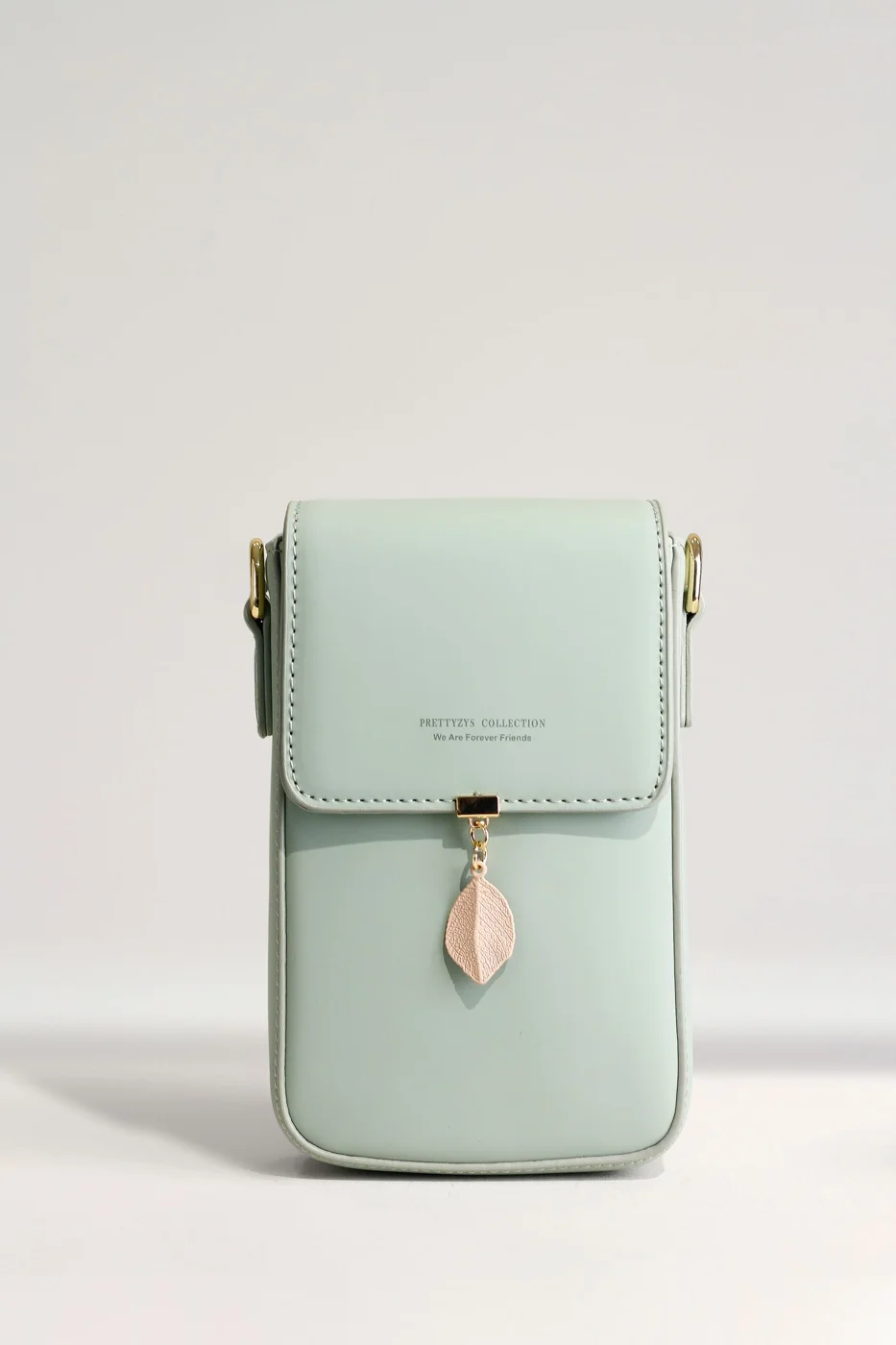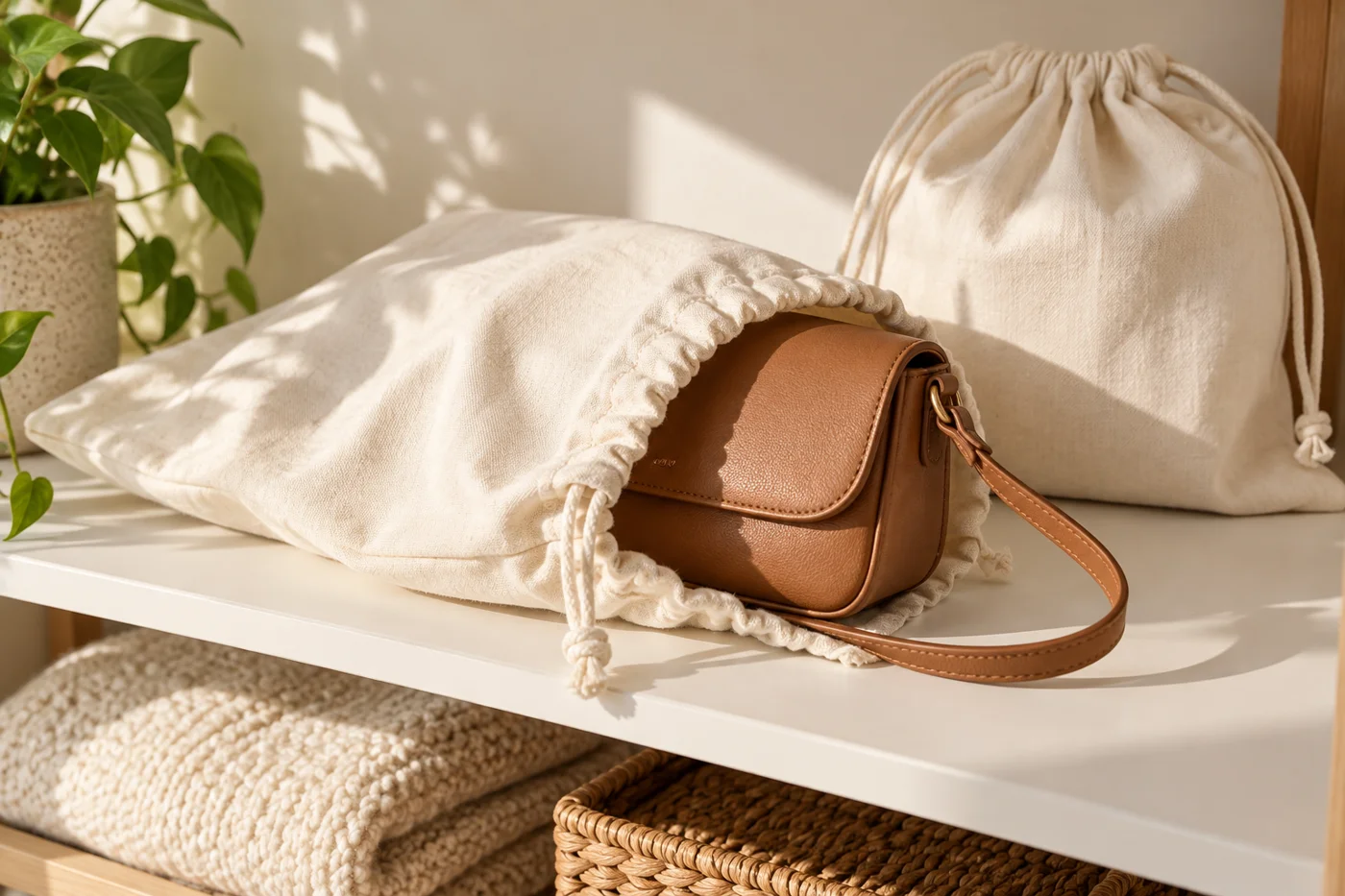
A dust bag is a cover, not a remedy for dampness or dirt. Putting an accessory away while it is wet or marked can conceal a problem until the next time you use it. Begin storage by checking the item's condition and following its specific care instructions.
Empty every pocket and remove loose receipts, crumbs, and objects that could press into the lining. Let any permitted cleaning or ordinary dampness dry fully before enclosing the item. Do not use direct heat as a shortcut unless the maker explicitly allows it.
Give the shape gentle support
A handbag may benefit from light, clean support inside so it does not collapse into sharp folds. Avoid overstuffing it until the seams or closure are under tension. The aim is to preserve a relaxed shape, not recreate a rigid store display.
Position straps so heavy hardware does not press into the surface. A metal buckle resting against soft leather or a delicate finish can leave an impression. Where appropriate, use the supplied protective wrapping or a clean compatible separator rather than adhesive tape.
Choose a cover large enough to slip on and off without scraping the item. A tight drawstring around a handle can create pressure, and a very small bag may compress corners. Light-colored, clean fabric is often useful, but follow the accessory maker's storage advice when materials need something more specific.
The closet matters as much as the cover
A fabric dust bag does not control the temperature or humidity of a storage space. Keep accessories in an appropriate indoor location away from unnecessary heat, direct sunlight, or damp conditions. Do not assume that sealing an item in plastic improves every situation.
Stacking heavy bags or boxes on a soft accessory can distort it even when each item has its own cover. Leave enough room to lift things out without pulling on handles or dragging one surface across another.
For jewelry and specialty materials, use the storage instructions that apply to the actual piece. A general handbag dust bag is not a substitute for separate jewelry compartments or material-specific care.
Periodically check items that remain stored for a season. Look for signs that the space or packing method is unsuitable and address them early. Useful storage makes an accessory easy to retrieve in good condition; it should not turn the closet into a tightly packed display that is difficult to inspect.