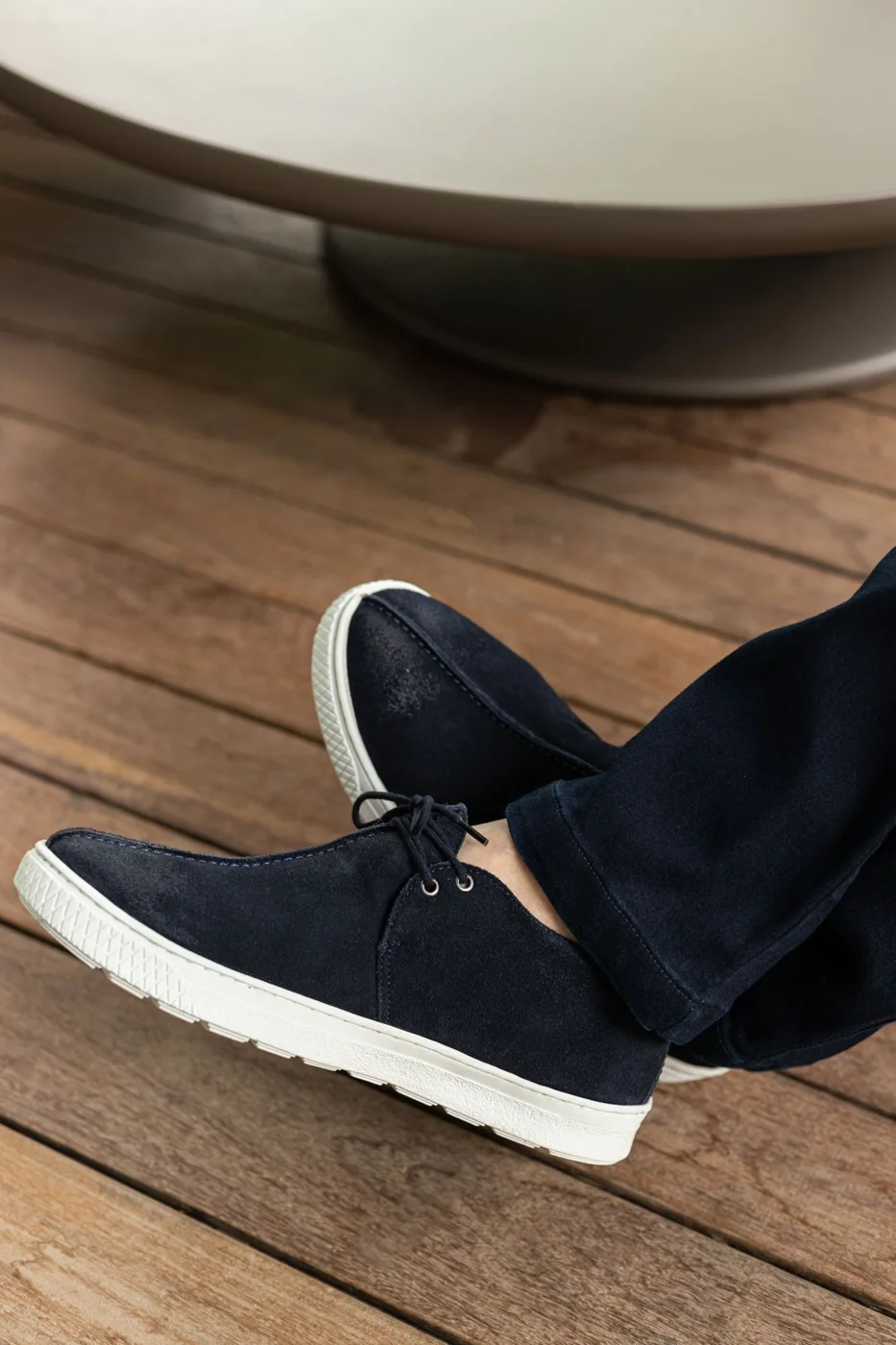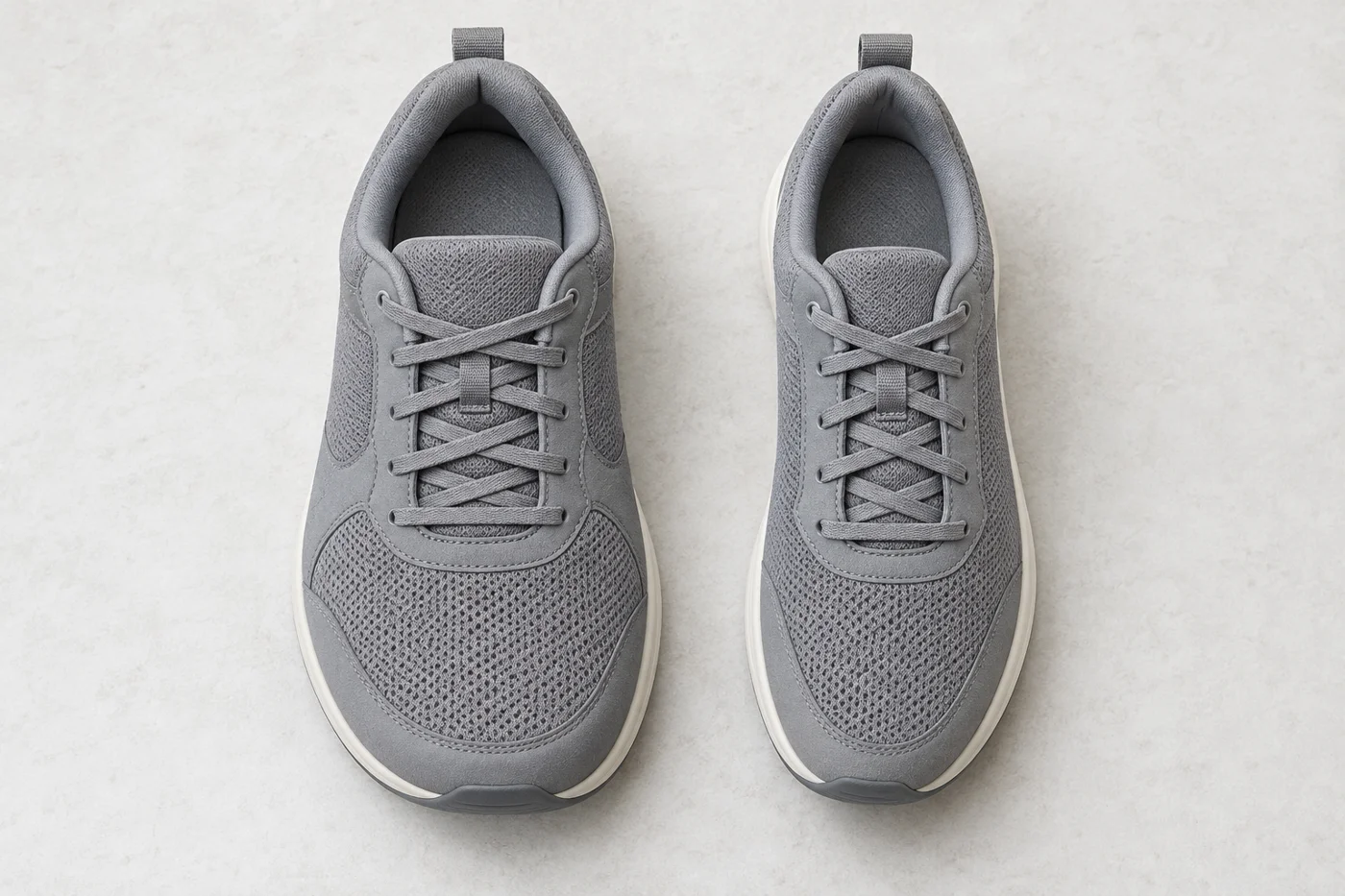
When a shoe squeezes at the sides, moving up a size can seem like the obvious answer. It may provide some additional space, but it also adds length and can change heel fit. If length was already appropriate, a wider option or different shape may address the actual problem more directly.
Identify where the pressure occurs. Is it across the widest part of the forefoot, over the instep, at the toes, or around one seam? These are not identical issues. A wide-width version may help some of them, while a different toe shape or upper depth may be needed for others.
Make a controlled comparison
Try the current size in another width, if available, before assuming the next length is necessary. Use the same socks and walk the same short route in both options. Check the heel as well as the area that originally felt tight. A wider shoe should not be accepted automatically if it creates excessive movement elsewhere.
New Balance's sizing guidance treats width as a separate fit variable and notes pressure at the sides or top as a reason to consider it. That is a useful prompt to compare, not a promise that every wide model will fit every broad foot. Different shoes can distribute their extra room differently.
Width letters also need context. A letter used in one range may not represent the same category in another gender range or brand. Read the specific chart instead of relying on a remembered code. The word wide is a starting point for a try-on, not a standardized comfort result.
Do not solve one end by sacrificing the other
If sizing up gives comfortable forefoot room but leaves the heel lifting and the foot sliding forward, note that tradeoff. Tightening laces excessively or adding several pads may disguise it without making the underlying shape suitable. Another model can be a better answer.
Likewise, a shorter wide shoe is not automatically equivalent to a longer standard one. Check toe room while standing and walking rather than comparing labels mathematically. The placement of the shoe's flexible area and contours can change with size.
Keep a note of the model, length, width, and the part of the fit that worked. That record helps future comparisons more than a single size number. The aim is enough space in the right locations with a secure, comfortable overall fit—not simply the largest available interior.