When two garment panels begin to separate, first look closely at what failed. If the joining thread has broken but the fabric edges remain sound, the problem is different from a tear running through the cloth. Sewing the visible gap closed without understanding that difference may create a weak or distorted repair.
Stop wearing the garment if ordinary movement is widening the damage. Lay it flat in good light and inspect both sides. Avoid pulling the opening apart to see farther; that can enlarge it.
Follow the original seam
Look for the path of the existing stitches and whether there is enough intact fabric beyond them. A small open section may be repairable along the original line, but frayed edges or a missing piece can require reinforcement or a more involved approach.
Consider the load on the area. An underarm, seat, pocket attachment, or bag handle seam experiences different stress from a loose decorative hem. If the garment is too tight, simply restitching the same line may not solve the underlying problem.
For a new item, contact the retailer before repairing it yourself. Photograph the condition and keep the order details. Alteration can affect the seller's ability to assess a defect or process a return.
Choose a repair you can execute cleanly
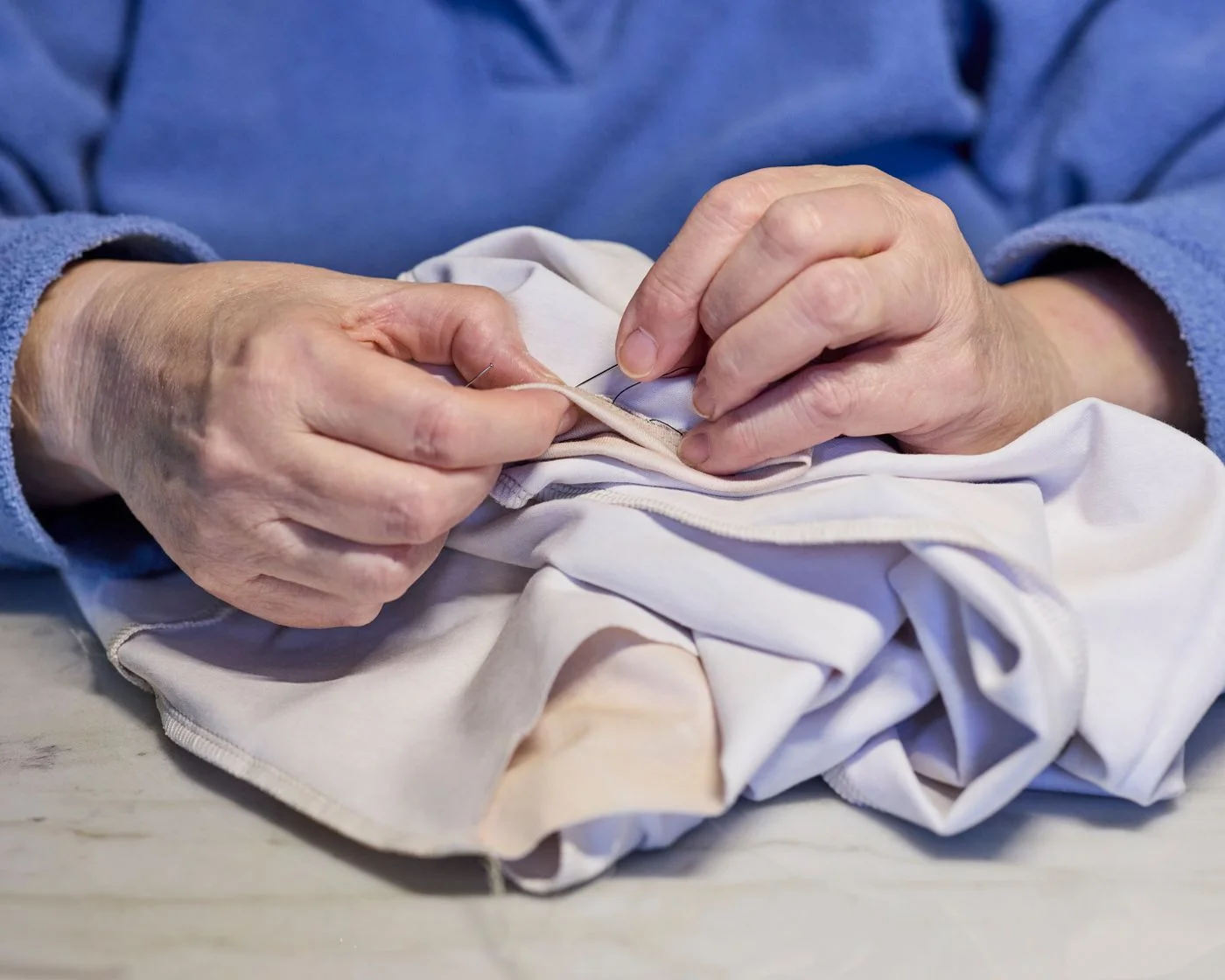
A basic seam repair may be within your sewing skills if the fabric is stable and the construction straightforward. Match the thread, needle, and method to the material rather than using the thickest thread available. Avoid making a tight ridge that changes how the garment hangs.
Stretch knits, fine fabrics, linings, and waterproof or specialized constructions can need particular techniques. If you are unsure, a tailor or repair service can assess the actual item. A general hand-stitching tutorial may not preserve the function of every garment.
Do not use adhesive as an automatic shortcut. Some products stiffen fabric, leave visible marks, or complicate later stitching. Follow the product's intended use and test only where appropriate.
After a repair, inspect it gently and try ordinary movement without immediately putting maximum strain on the area. Check again after the garment's next permitted cleaning.
A small repair is most useful when it addresses the real failure while the surrounding material is still sound. Identifying the difference between broken thread, damaged cloth, and an ongoing fit problem helps you decide whether to sew, seek help, or reconsider the garment's role.