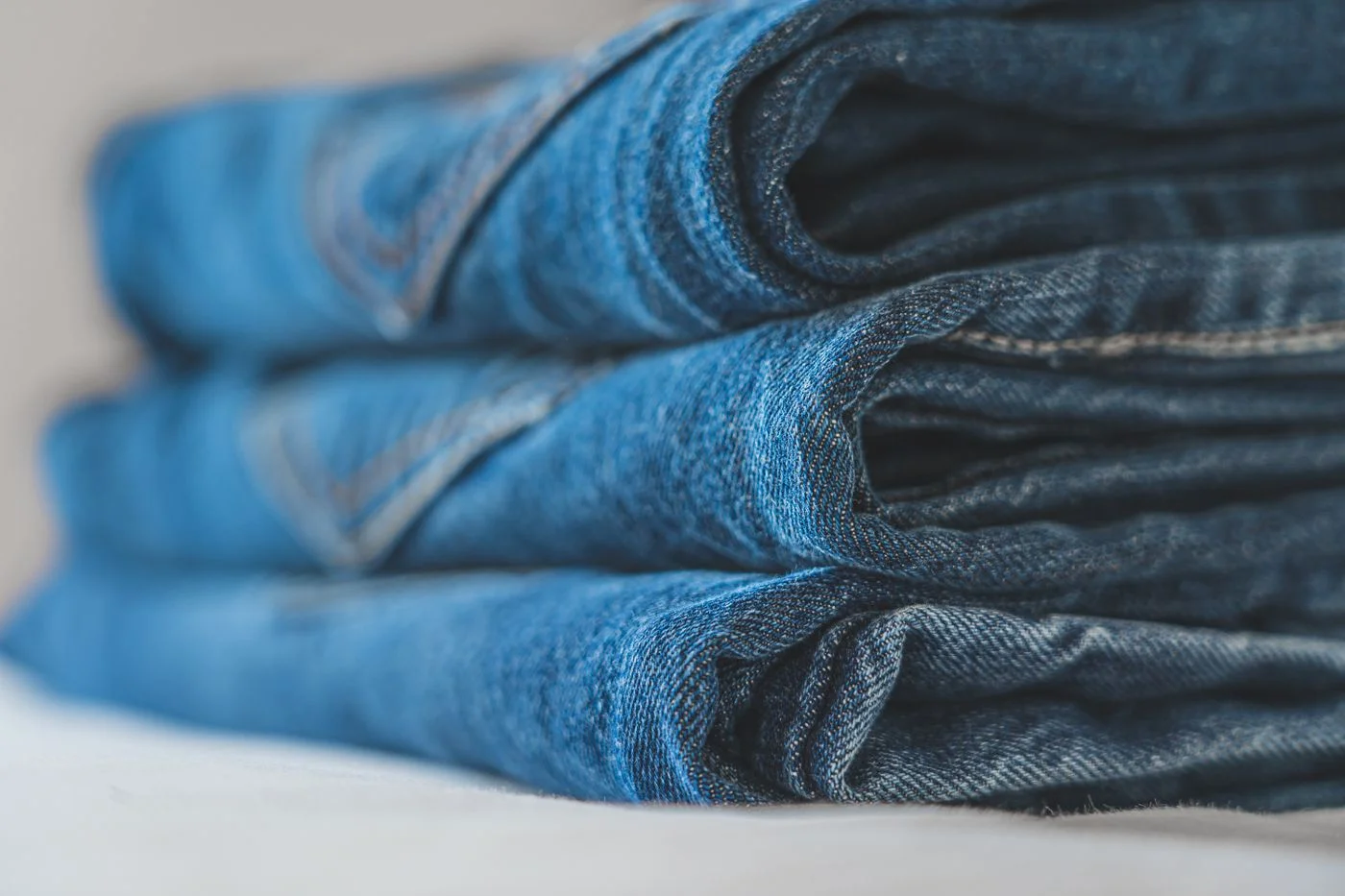
Two pairs of jeans can have the same waist measurement and still feel very different after an hour. A firm, all-cotton denim may hold its silhouette while resisting movement at the hip. A stretch blend may feel easier when you sit, yet fit more closely through the thigh. Neither description tells you whether the actual cut works for your body.
Start with the job you want the jeans to do. A structured straight leg for occasional wear is a different purchase from a close-fitting pair for a day of sitting, bending, and commuting. The useful comparison is between complete garments, not a competition between fiber labels.
What the fabric label can tell you
Rigid denim usually means denim without an added stretch fiber. Stretch denim typically contains a small proportion of elastane, sometimes labeled spandex. The percentage helps describe the blend, but it does not reveal the whole fabric construction. Two blends with the same listed percentage can stretch and recover differently.
Feel the cloth and gently test the areas that need to move. Notice whether it gives across the width, along the length, or in both directions. Do not pull a new garment hard enough to distort it. A soft finish can make rigid jeans comfortable to touch without making them elastic; conversely, a stretchy fabric can still feel substantial.
Try the shape while seated
Fasten the jeans normally, then sit in a chair. Check the waistband, front rise, and tops of the thighs. A waistband that cuts in sharply is not a sensible bet on eventual break-in. Stand up and bend your knees. The movement should not depend on leaving the fly partly open or hitching the legs upward.
With rigid denim, allow the room the pattern needs for movement. Do not assume every tight area will relax by the same amount. With stretch denim, resist the temptation to size down until the fabric is permanently under tension. Look for seams that lie comfortably and pockets that do not pull open.
Compare recovery, not just stretch
After a short indoor try-on, look at the knees and seat. Some temporary creasing is ordinary. What matters is whether the overall fit still feels secure and whether the garment already seems looser than you intended. This is a useful first check, not a prediction of months of wear.
If you already own jeans in a similar blend, use their behavior as a reference. Bring measurements from that pair, but also note what you dislike: a sagging waistband, restricted thighs, or a leg that twists. A familiar brand name or size does not guarantee that a different style will behave the same way.
Buy for the care you can provide
Read the care label before removing tags. Washing temperature, drying method, and the fabric finish can all affect how your jeans feel afterward. Avoid choosing a pair on the assumption that a hot wash will shrink only one inconvenient area. Alterations may help with length, but they cannot turn a restrictive rise into an entirely different pattern.
Keep the pair that gives you the silhouette you want while allowing the movements you actually make. If both pairs fit, the deciding factor may simply be whether you prefer the firm drape of rigid denim or the easier give of stretch. That is a useful preference, rather than a rule about which fabric is universally better.