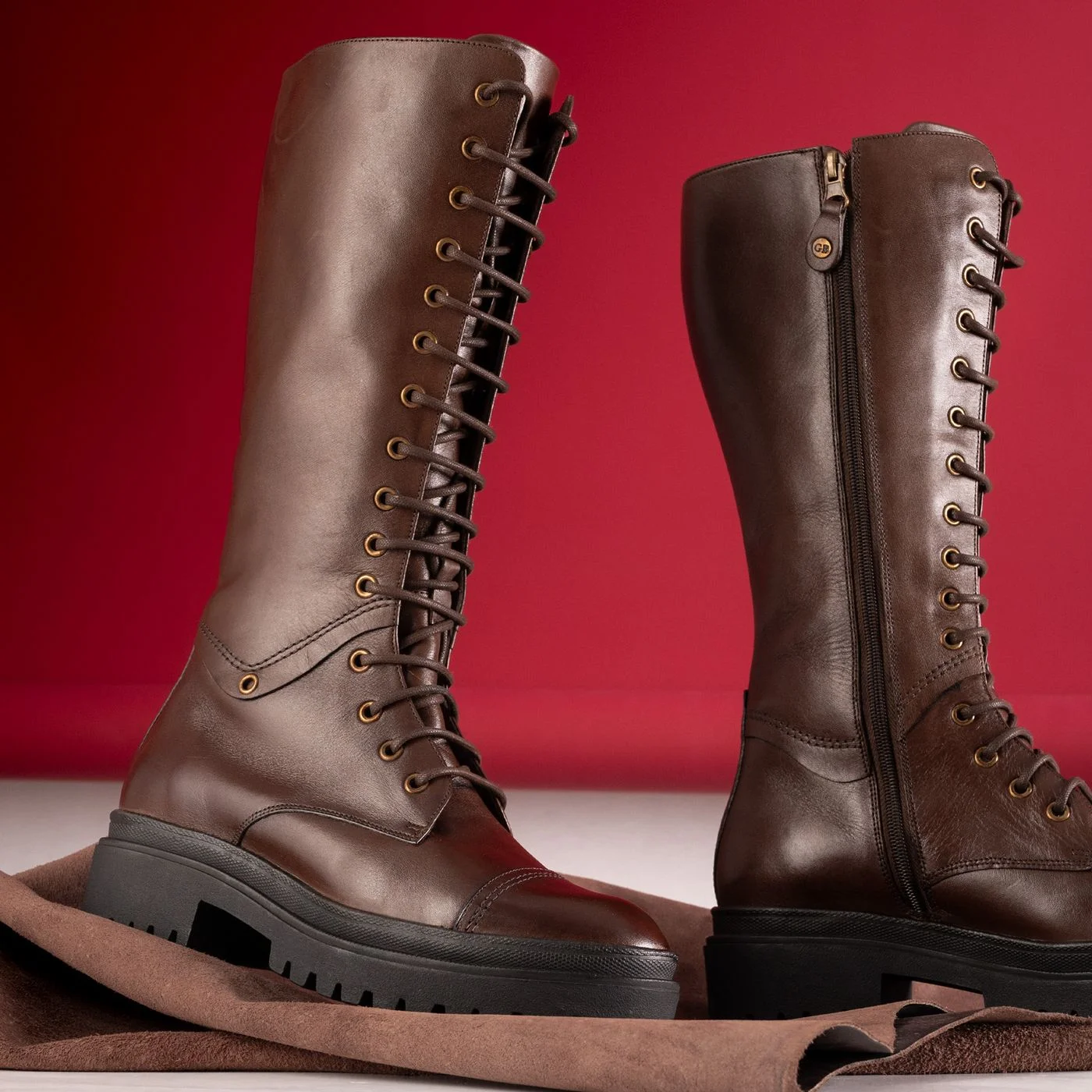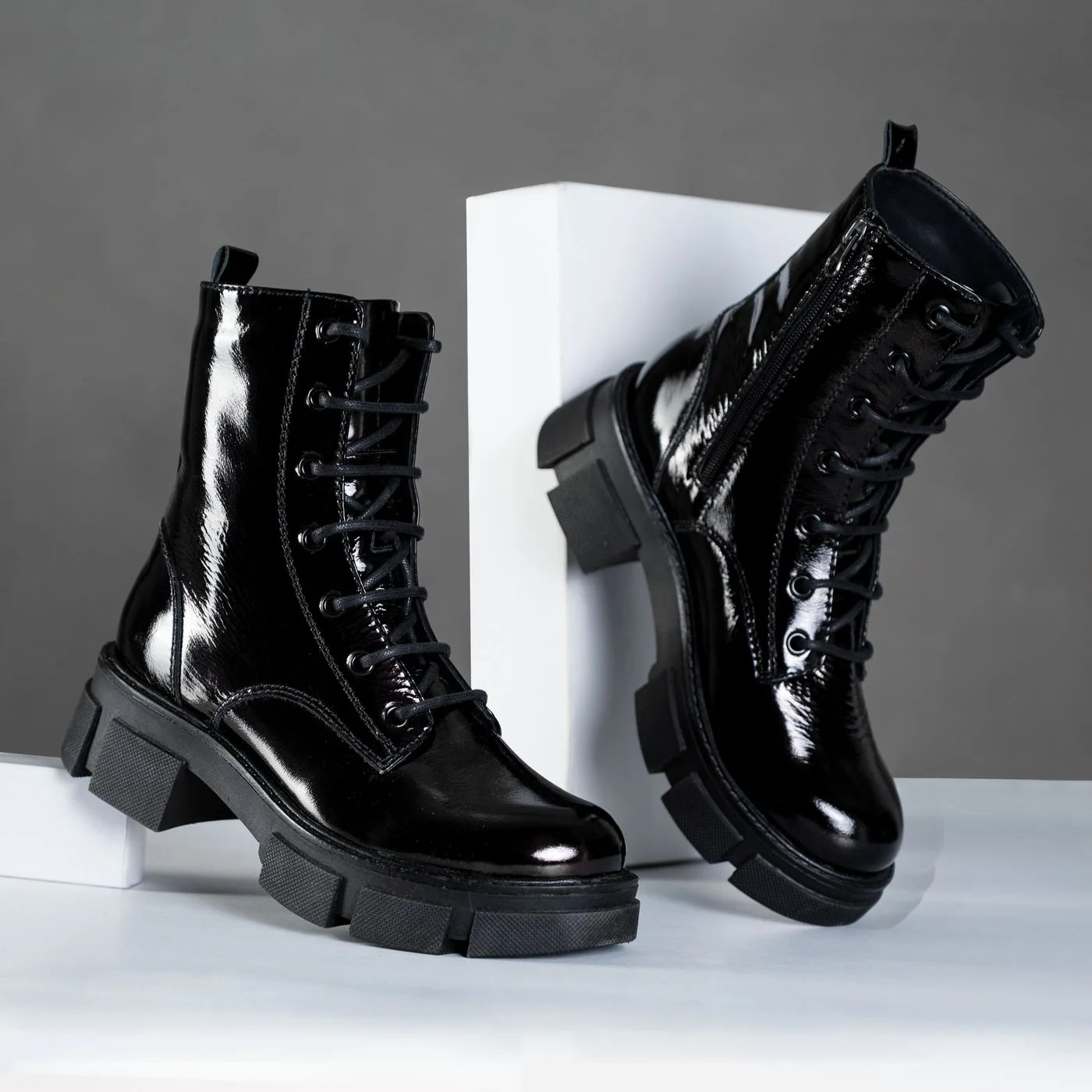
Lace-up boots offer adjustment along the upper, which can be useful when you wear different socks or prefer a slightly different tension during the day. That flexibility has limits. Laces can change how the upper closes; they cannot lengthen the sole or make an incompatible toe shape comfortable.
Try the boots with the thicker of the socks you realistically expect to wear, then compare the thinner option if both matter. This gives you a sense of the usable adjustment range. Avoid an oversized boot that only feels secure when the laces are pulled painfully tight.
Adjust from the foot upward
Loosen the boot enough to seat your heel properly. Tighten gradually through the lower eyelets, then adjust the ankle section separately if the design allows. Pulling only at the top can leave excess movement near the foot while creating pressure around the leg.
Walk and notice where the upper bends. A rigid edge, tongue fold, or lace crossing can press on the instep even when the overall size is reasonable. Smooth the tongue and compare tension before deciding whether the problem is adjustment or the boot's shape.
The eyelet rows provide a clue about available volume. If they meet completely and the foot still slides, the boot may be too roomy. If they remain far apart and the tongue barely covers the opening, the model may be too shallow for the foot or sock combination. These are reasons to compare alternatives, not to force the closure harder.
Keep the everyday routine realistic
Count the time and dexterity needed to put the boots on. Speed hooks, zippers, or fewer eyelets can change the experience, but each detail should work reliably for you. If a side zipper is present, check it with the laces adjusted to your fit rather than assuming it will close in every setting.
Consider the height of the shaft with your pants and seated posture. A tall, stiff boot may feel different at a desk than during a short walk. The intended use should guide the choice.
Laces are valuable when they let you fine-tune a boot that already has adequate length, width, and toe room. Before keeping the pair, remove it and put it back on once more. A comfortable setting should be reasonably easy to reproduce without a long sequence of adjustments every time you leave home.