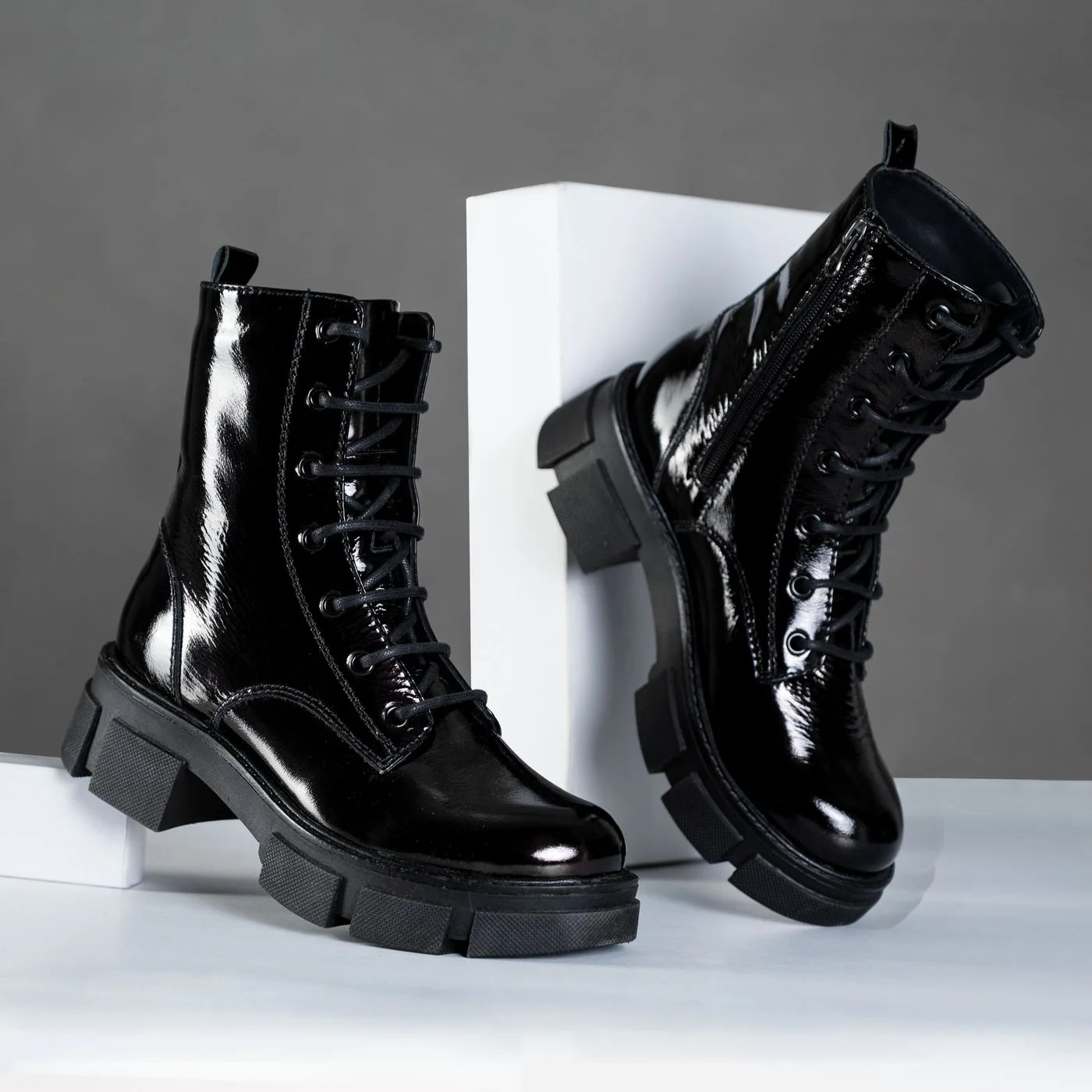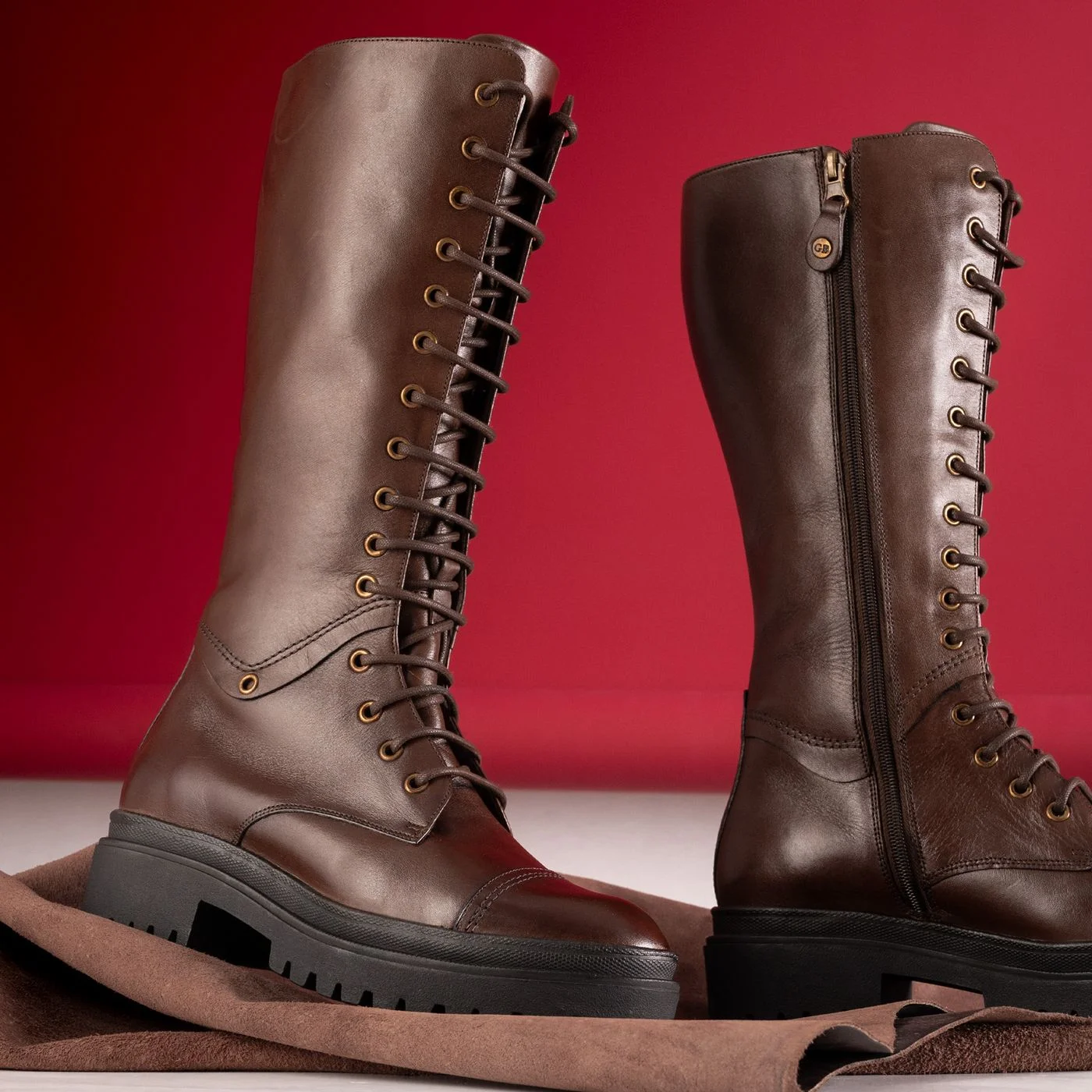
Knee-high boots have to fit more than the foot. Shaft height, calf circumference, ankle shape, and the opening at the top all influence whether the boot is comfortable. A wide-calf label can help narrow a search, but it does not replace actual measurements or tell you where the widest part is located.
Measure the calf at its fullest point with a flexible tape held level and comfortably against the skin. If you will wear the boots over jeans, repeat with those jeans on. Record both legs if they differ. A bare-leg measurement does not account for the layers you may tuck inside.
Compare measurements that mean the same thing
Retailers may measure shaft height from different points, and a listed circumference may apply to only one shoe size. Look for the method and reference size. Ask whether the shaft width changes across sizes and whether the measurement includes stretch or is taken with the boot relaxed.
Do not add an arbitrary allowance without considering the design. A soft stretch shaft, a rigid leather shaft, and a boot with adjustable buckles need different fitting judgments. The important question is whether the finished boot offers comfortable room in the places where your leg occupies it.
Height deserves particular attention. A boot described as knee-high may reach a different point on you than on the model. When seated, the top edge can press behind the knee even if it feels fine standing. Compare the listed height with the distance to the position you want, using the seller's measurement method where possible.
Test the zipper without force
Put on the boot with the intended hosiery or pants. Smooth the layers rather than leaving a thick fold inside. The zipper should close without needing to pull the two sides together aggressively. Keep fabric clear of the teeth and stop if it catches.
Once closed, sit, stand, and walk. Check pressure at the calf, ankle, and top edge. A boot can be roomy at the opening but tight lower down, or loose around the ankle while close at the calf. More circumference everywhere is not always the best answer.
For boots worn over jeans, compare a realistic slim pair rather than an unusually thin layer chosen just to make them fit. If the boot only works with one special garment, decide whether that limitation suits your wardrobe. For bare-leg wear, check whether you like the amount of space at the top; a visible gap is a style preference unless it causes another functional issue.
Keep the foot fit separate
It is easy to become so focused on the shaft that you accept cramped toes or a loose heel. Walk in both boots and assess the foot exactly as you would with a shorter shoe. A suitable calf measurement does not establish a suitable last.
Alterations to a boot shaft can be specialized and may not be feasible with every construction. Ask a qualified repairer before purchasing on the assumption that stretching or narrowing will solve the issue. The strongest option fits the foot and leg together, with the layers you actually intend to wear.