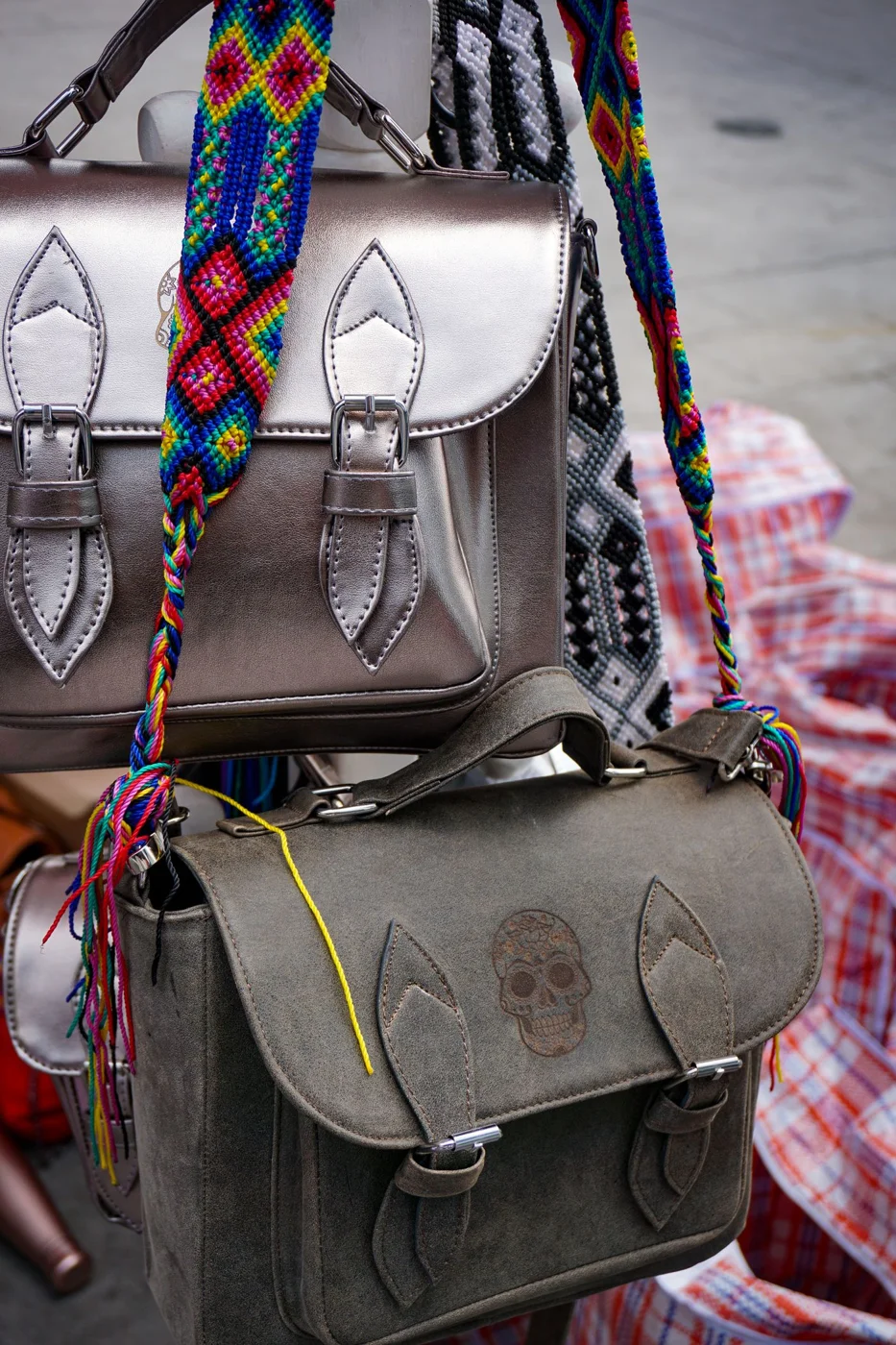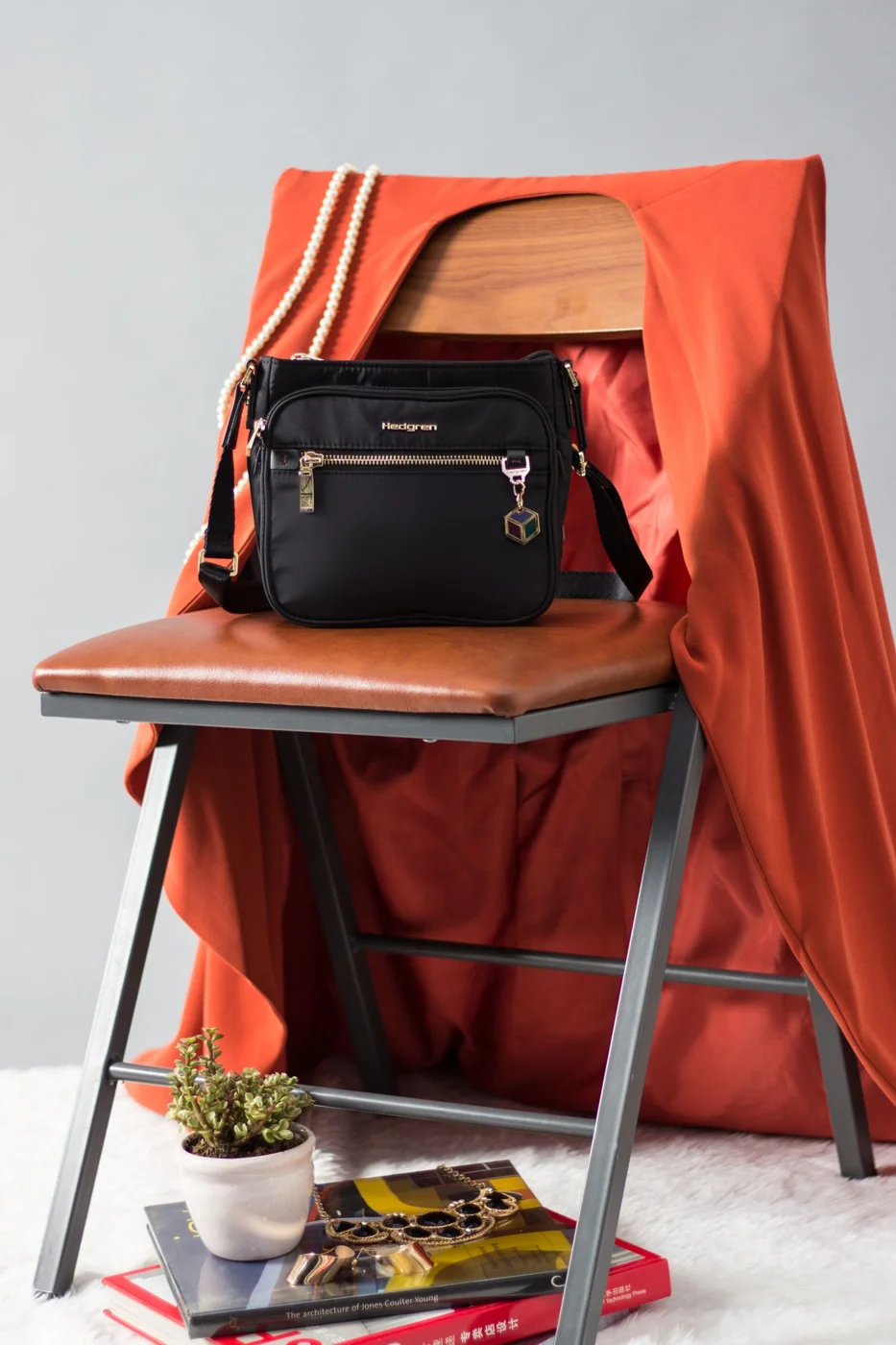
The advertised strap length of a crossbody bag is only a starting point. The bag's width, attachment position, and your clothing all influence where it rests. A strap that appears long enough on a product page may place a deep bag lower than expected, while a compact bag on the same strap can sit comfortably at your side.
Use an existing bag to identify a useful range. Measure its strap along the full path between attachment points and note whether the listed specification for a new bag includes clips. Sellers sometimes describe strap length and strap drop differently. Ask for clarification when the measurement is ambiguous rather than converting one into the other by guesswork.
Try the shortest and longest useful settings
Put on a typical outer layer and adjust the bag to a position where your hand reaches the opening naturally. Then try it over a light shirt. You should have enough adjustment in both directions without relying on the last hole or leaving a long loose tail.
Walk a few steps, sit, and bend to pick up something. Notice whether the bag swings forward, pushes into the chair, or slides toward your front. Movement is normal; persistent repositioning may suggest that the shape or carrying height does not suit you. This is a comfort check, not an assessment of medical support.
The adjuster itself matters. A sliding buckle should stay where you place it with a normal load, and a punched strap should lie flat at the chosen hole. Check whether excess strap has a keeper and whether the keeper can actually hold both layers.
Add the things that create weight
A phone and wallet can change how a small bag hangs. Pack them before deciding that a narrow strap feels comfortable. Check how the attachment rings rotate and whether a clip presses against your clothing. A wider strap can spread contact across more fabric, but it can also bunch at the shoulder or interfere with a coat collar.
Finally, reach the pockets while wearing the bag. A rear pocket that looks convenient may be awkward against your body, while a front pocket may open in an unexpected direction. Pocket count is secondary to being able to retrieve your essentials and close the bag without twisting it around. Keep the style that works at a repeatable, comfortable height in the clothes you actually wear.