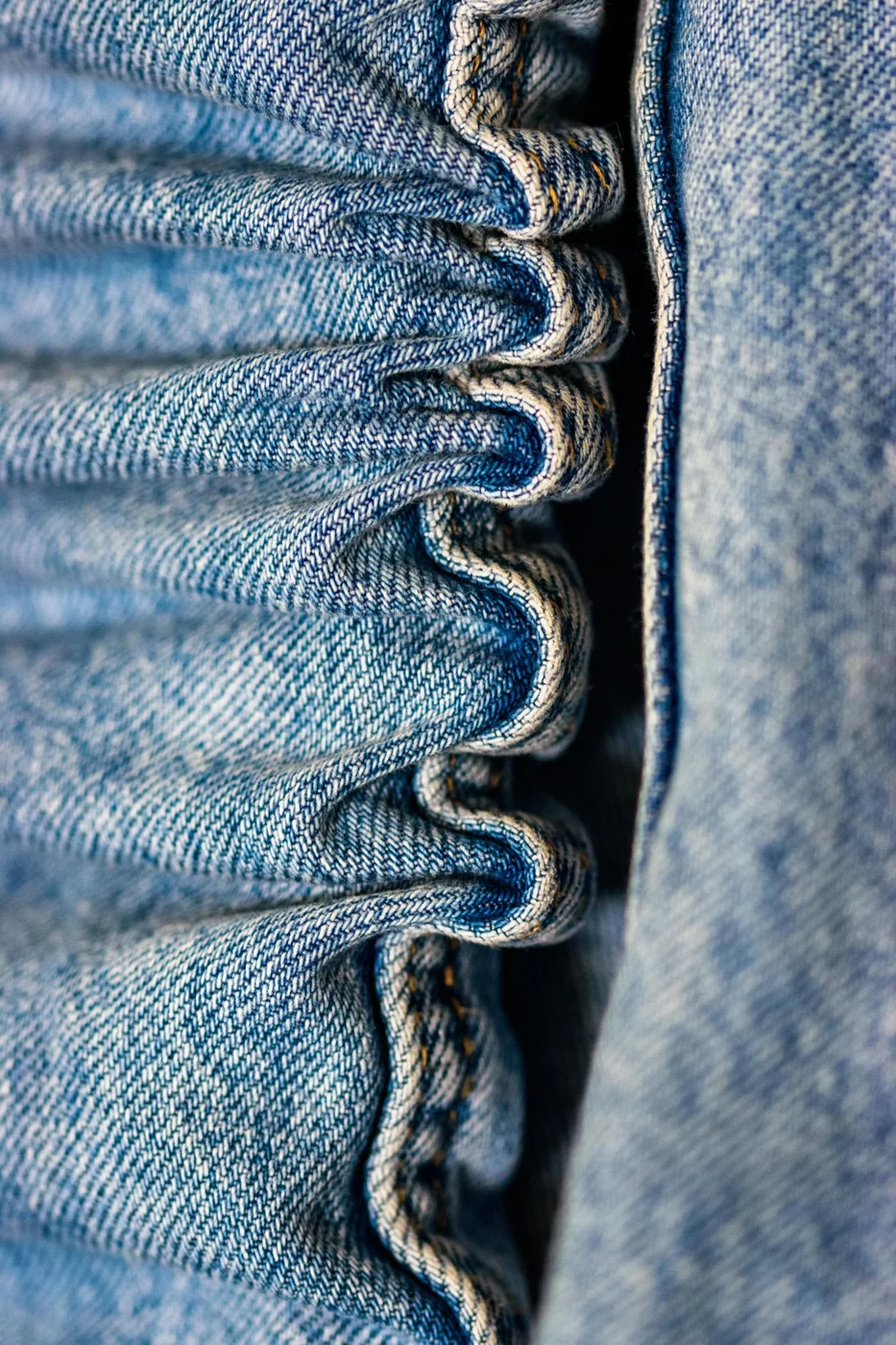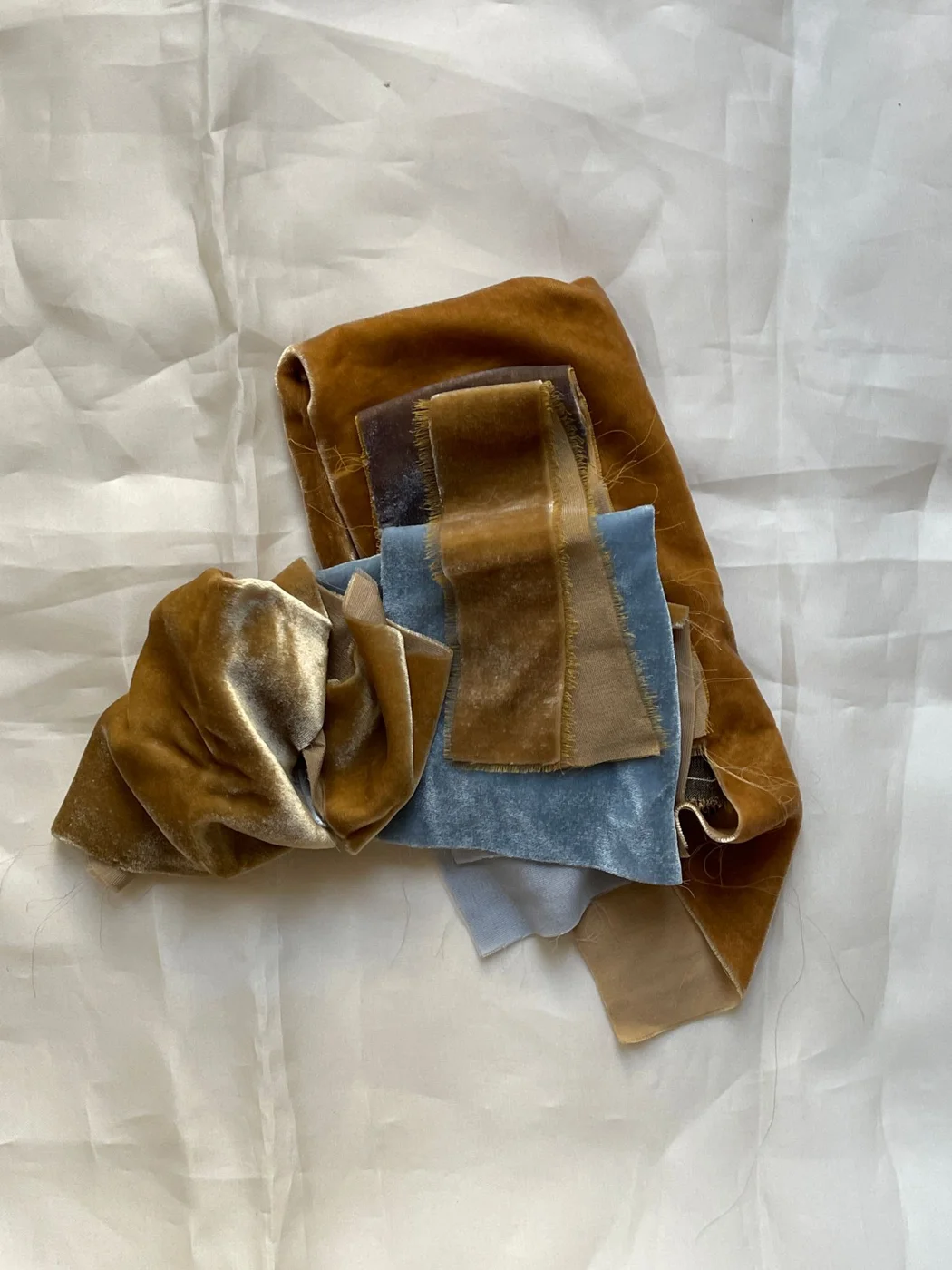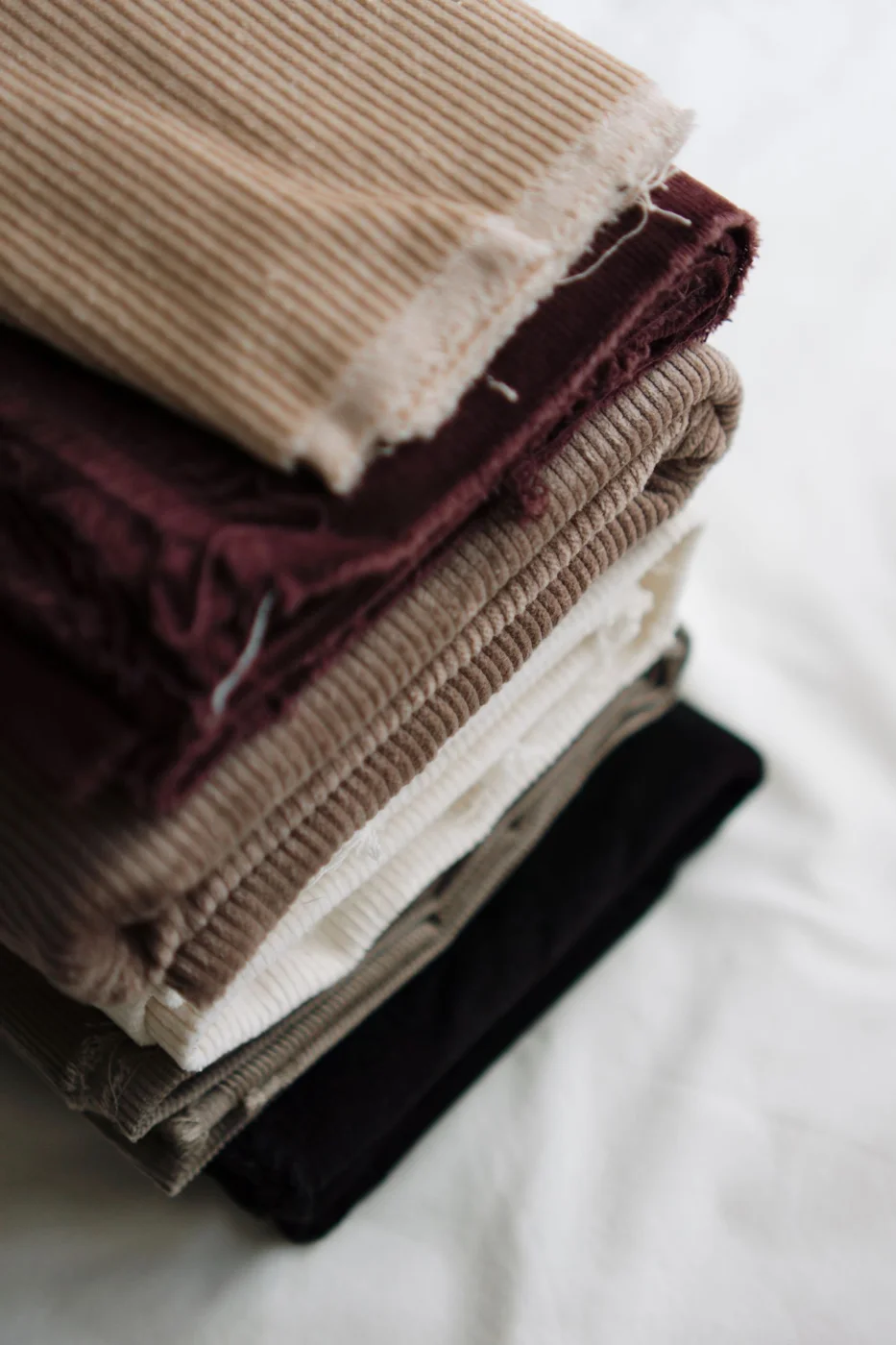
Corduroy is recognizable by its raised ribs, often called wales. Fine ribs can give a relatively subtle texture, while broader ribs make the surface more pronounced. This is a visual and tactile choice before it is a question of quality.
Look at the garment from a normal viewing distance, not only in a close-up. A wide-wale trouser can appear more textured and substantial than a fine-wale shirt. Neither is inherently more appropriate; consider how the scale works with the cut and the other clothes you own.
Follow the direction of the surface
Brush the fabric lightly with your hand and notice whether the shade appears to change with direction. The raised surface catches light differently, so photographs can vary depending on lighting and arrangement. If color is important, inspect more than one image or view the item in person.
Check seams where panels meet. An intentional change in direction is different from a piece that appears unexpectedly mismatched. Ask about anything that seems inconsistent rather than assuming a photograph proves a manufacturing defect.
Fit affects contact
Try sitting and bending, especially in trousers or a fitted jacket. A tight area can place more strain on seams and create repeated rubbing at the same point. Corduroy's texture should not distract from ordinary fit requirements at the hips, knees, shoulders, and elbows.
Look at secondhand garments in those contact areas. Flattened ribs, shiny patches, and worn edges may be more visible there than on the front panel shown in a listing. Ask for clear photographs if the condition matters to you.
For a new garment, inspect hems, pocket mouths, and the seat without trying to simulate long-term wear. A shopping inspection can identify existing issues; it cannot guarantee how the surface will age.
Care instructions vary with fiber blend, lining, and construction. Follow the label and avoid applying a universal high-heat pressing method to the raised surface. If you need advice on restoring a marked area, ask about the specific garment rather than brushing or steaming aggressively.
Choose the rib scale because you enjoy its appearance in the finished cut. Then assess movement, care, and visible condition as you would with any other fabric. The texture is part of the appeal, but it should not be asked to compensate for a poor fit.