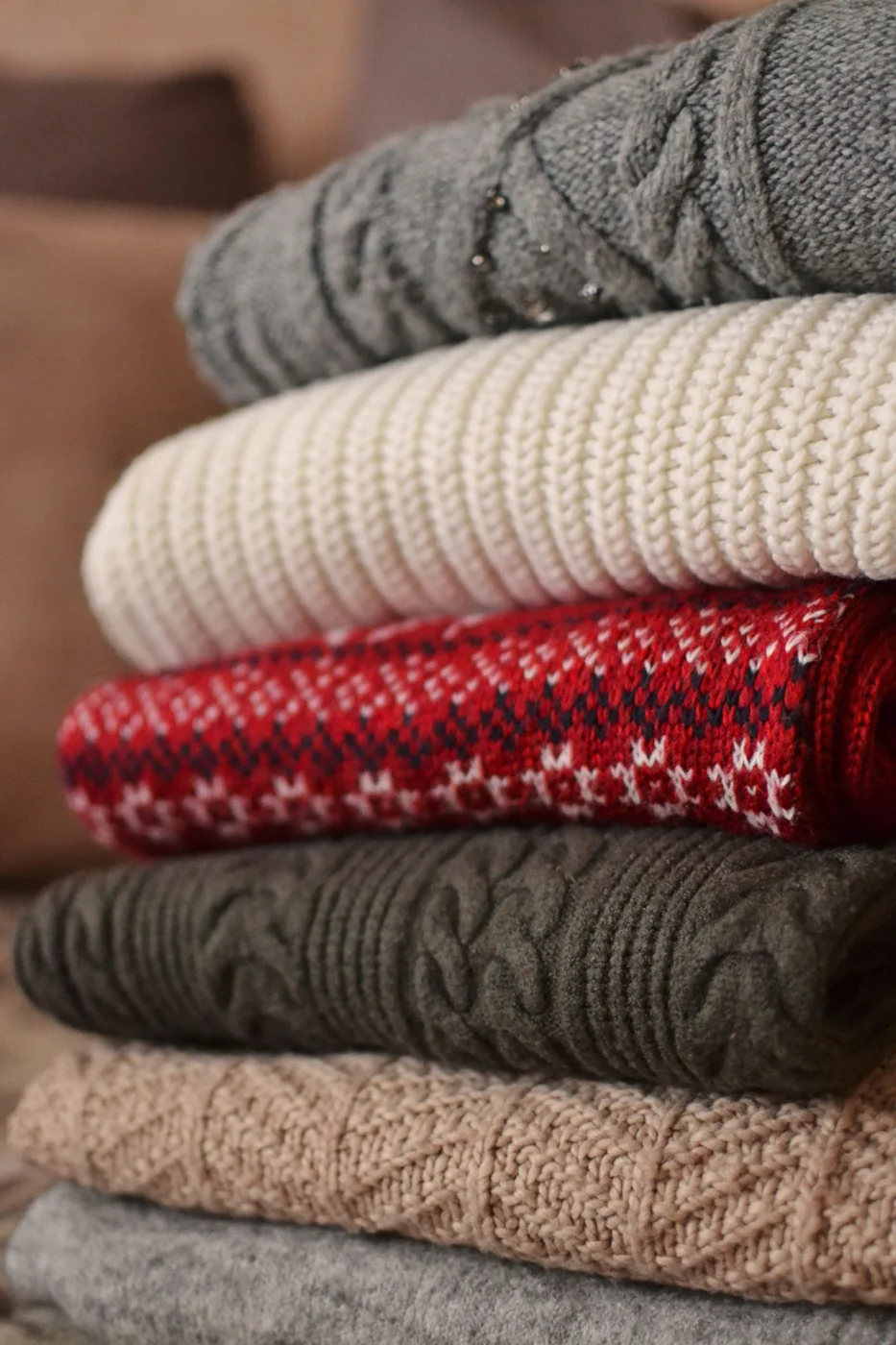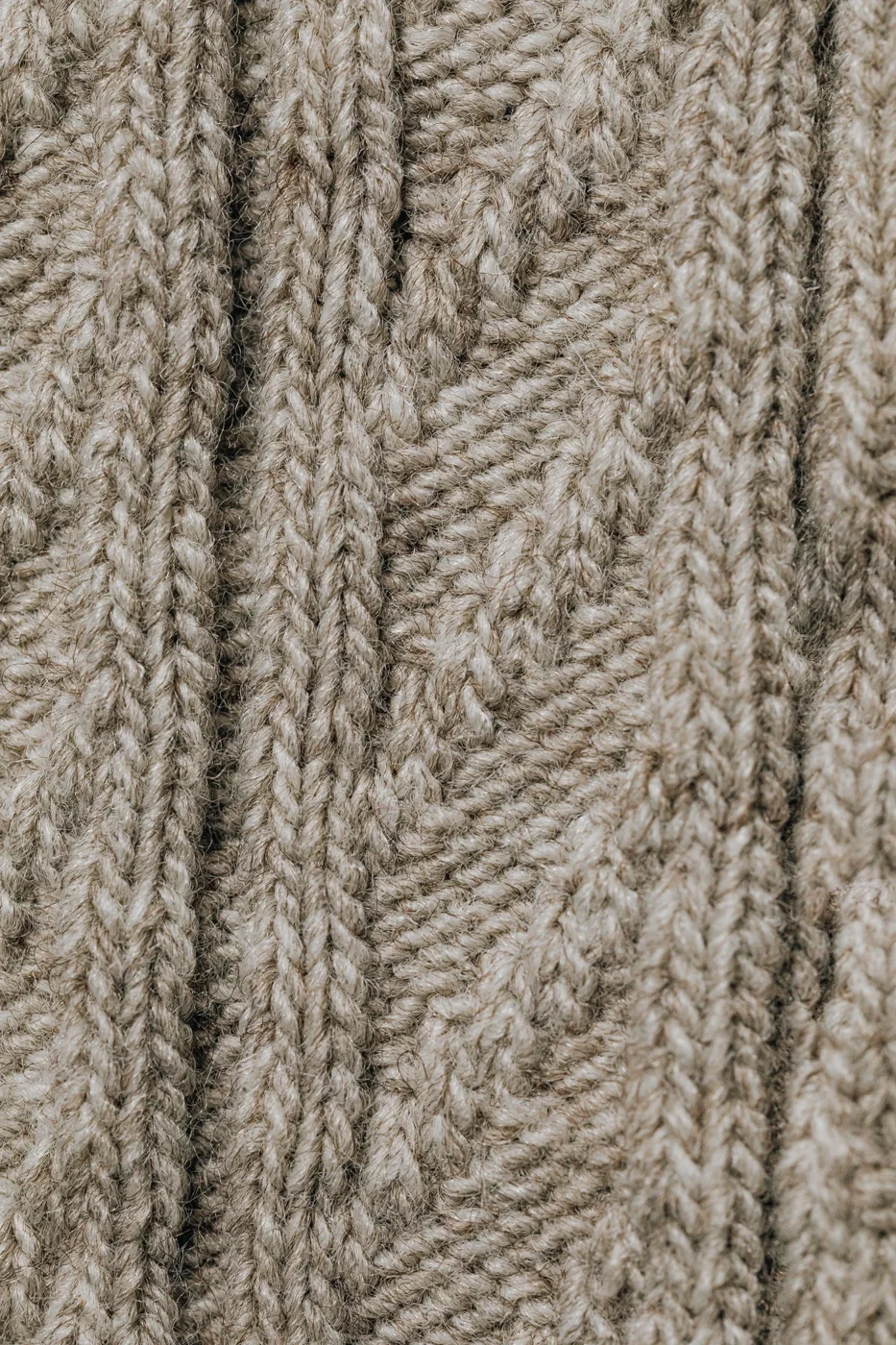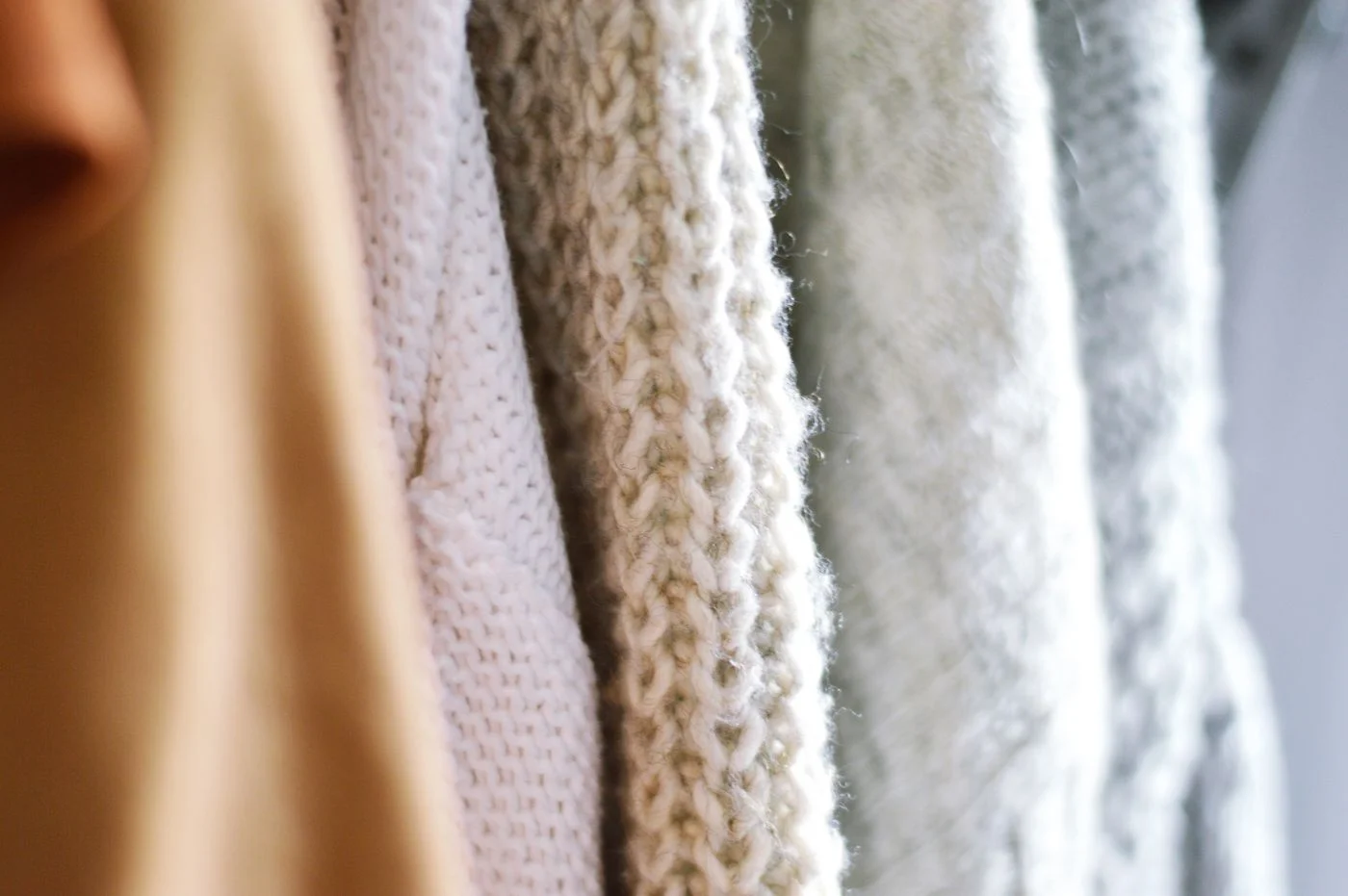
Acrylic knitwear ranges from light, smooth sweaters to bulky textured pieces. The fiber name alone does not tell you whether a particular garment will fit well, retain a useful shape, or suit the way you wash clothes. Compare the finished knit, especially if a low price encourages a quick decision.
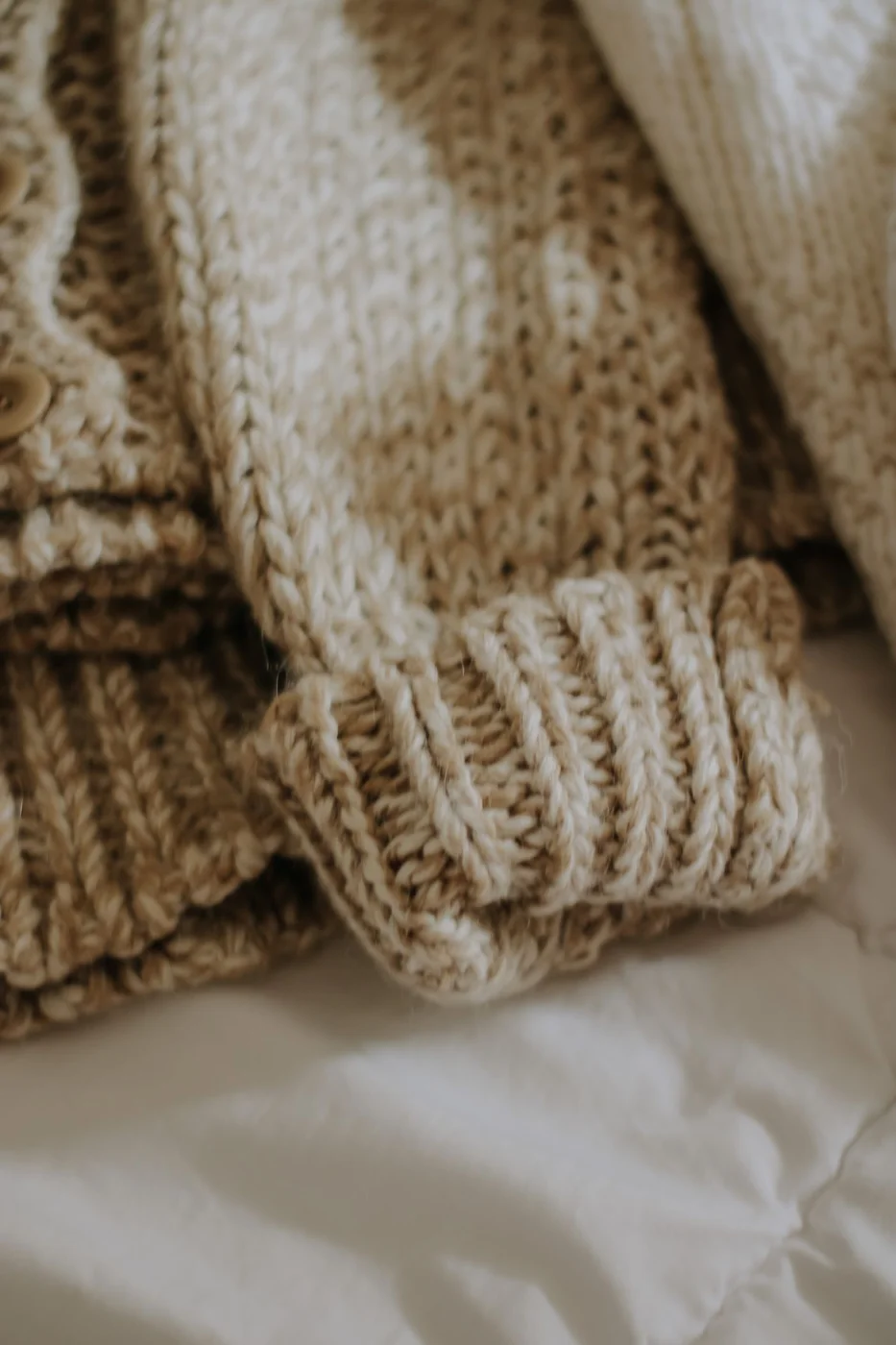
Start by handling the areas that will move most: cuffs, neckline, elbows, and hem. Look for consistent stitching and check whether the garment returns to its resting shape after a gentle try-on. Do not stretch it repeatedly as a test.
Surface texture and your routine
A fluffy surface can be part of the design, while small compact balls of fiber are pilling. Examine a new item for visible damage without assuming that every soft halo is a defect. A photograph may make these distinctions difficult, so ask for a closer image when buying secondhand.
Consider what will rub against the sweater. Bag straps, coat linings, and desk edges create different contact patterns. No ordinary shopping inspection can guarantee that a garment will never pill, but this context helps you decide whether a delicate-looking surface fits daily use.
A highly textured knit may also catch on jewelry or rough hardware. Try the intended accessories carefully and avoid dragging a sharp clasp across the fabric.
The inside deserves a look
Seams and labels can feel different from the decorative outer surface. If you plan to wear the sweater over a thin top, check those contact points. A comfortable fabric on the front does not compensate for a stiff neckline seam.
Look at opacity and weight in the intended layer combination. A bulky-looking sweater may be loosely knitted and need a shirt beneath it. Conversely, a compact fine knit can feel more substantial than its photograph suggests.
Read the care label before assuming that a synthetic fiber makes the item suitable for any washer or dryer setting. Heat, trim, and the complete construction still matter. Follow the specified drying method rather than using a hot cycle to correct a loose fit.
Price is one part of the decision. Compare whether the sweater fills a real clothing need, works with your existing layers, and asks for care you can provide. An inexpensive knit that you enjoy wearing can be useful; an unsuitable shape remains unsuitable regardless of the fiber or discount.