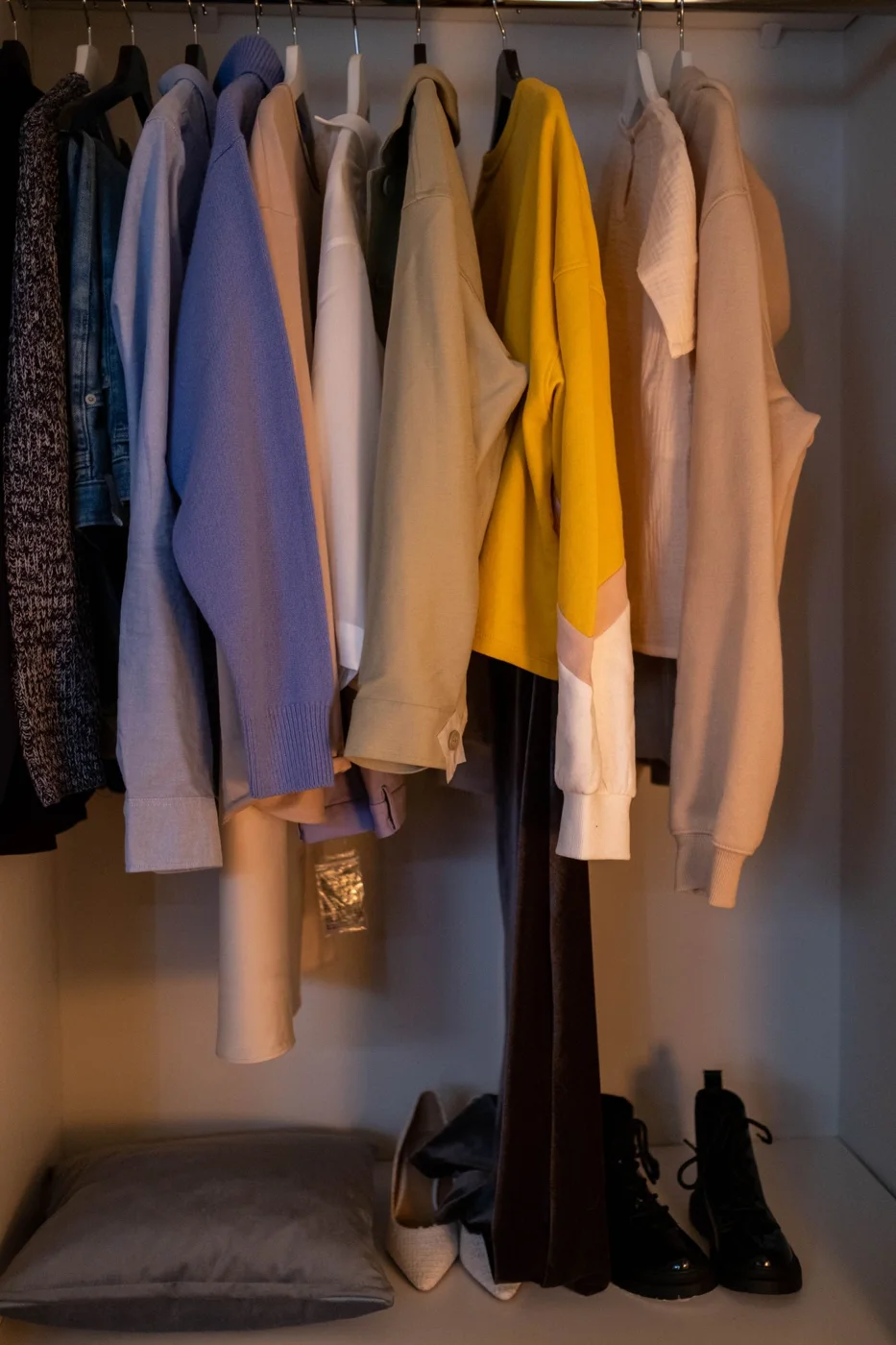
A sale-shopping list begins with what is already available to wear. Open the closet, choose a few ordinary outfits, and notice where the routine breaks down. Perhaps the trousers fit but the only suitable shirt is always in the laundry. Perhaps three jackets compete for the same mild-weather day while no layer works in rain.
These observations create a more useful list than broad categories such as tops or shoes. They identify the role a purchase needs to fill and make it easier to reject a discounted item that does something else.
Record the missing specification
Describe the need with enough detail to compare products. A machine-washable navy shirt with sleeves that fit under a blazer is more specific than a smart top. A closed shoe that fits your usual socks and works with two pairs of trousers is more useful than a versatile shoe, which can mean almost anything.
Include measurements or fit problems from the garments you already own. If a current pair of trousers is comfortable except for its length, note that difference. If a neckline never feels right, do not buy a discounted version of the same shape simply because the color is appealing.
Give the list an order
Separate replacements needed soon from additions that can wait. A worn-out everyday item and a second version of an occasional piece should not compete on equal terms just because both are reduced. Decide your total spending limit before viewing individual discounts.
You can leave room for an unplanned discovery, but make the rule explicit. For example, it must fit the existing palette, work with named pieces, and fit within the same overall budget. A flexible list does not have to become an unlimited one.
Use the list at checkout
For every item in the cart, point to the need it meets. If two pieces solve the same problem, compare them rather than keeping both by default. Check that the available size and color are the ones you wanted; a compromise becomes more expensive if it stays unworn.
After buying, update the list. Remove the solved need, record any care or fit lesson, and return unsuitable items within the stated window. This prevents the same vague shortage from justifying repeated purchases. A good sale can help you complete the list, but the list should remain useful even when nothing appealing is discounted.