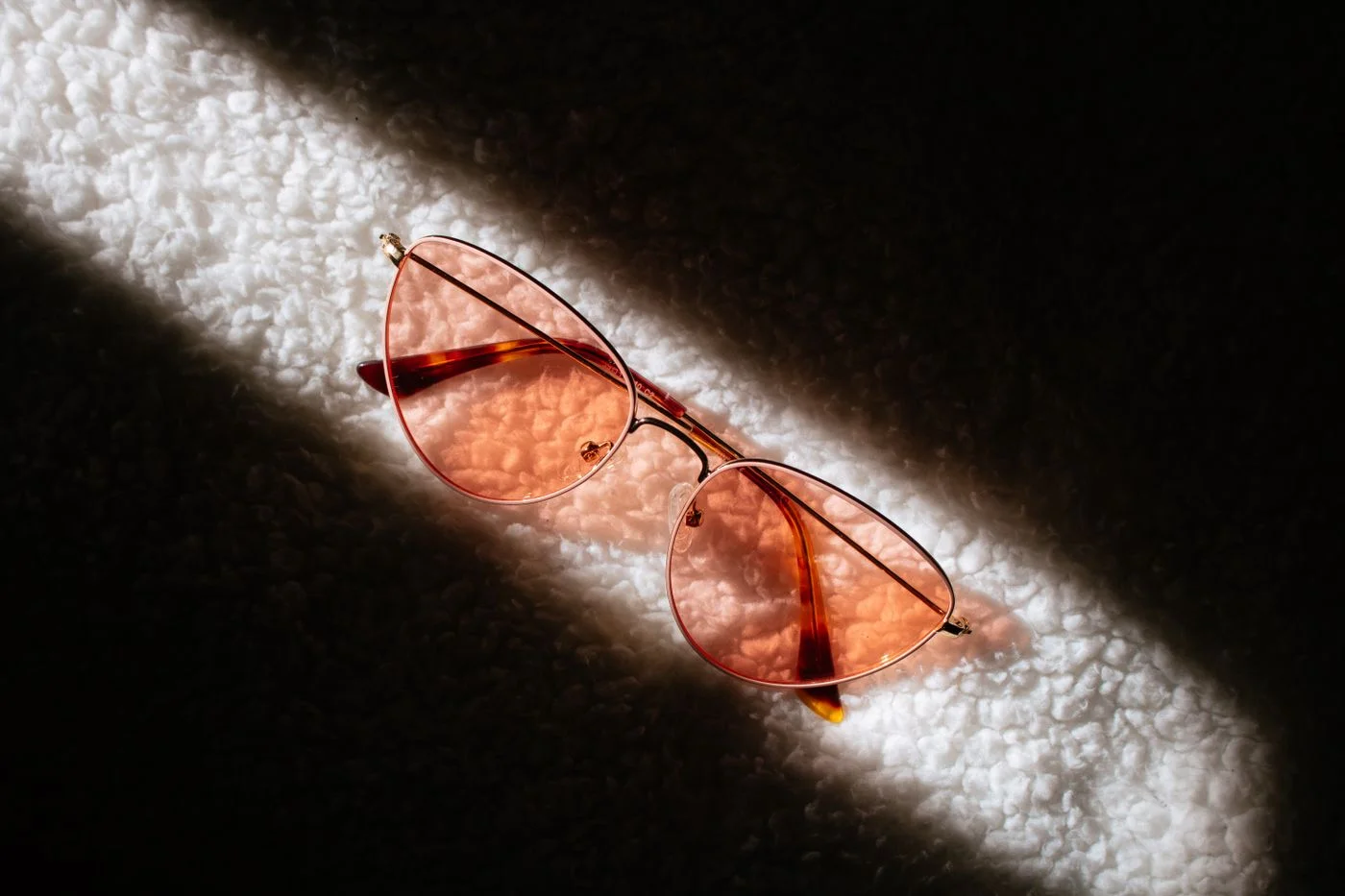
Dark lenses are not evidence of strong ultraviolet protection. When choosing sunglasses, separate the lens information from the frame style. The FDA advises looking for a UV400 rating or a statement of 100% UV protection. Lens tint and polarization describe other aspects of the viewing experience; neither should replace an explicit UV claim.
Buy from a seller that identifies the product clearly and can answer questions about its lens specifications. If the listing shows only a fashion description, ask for the missing information rather than inferring it from price or darkness.
Fit has several contact points
Place the glasses on your face without pushing them into position. The bridge should support them comfortably, and the arms should sit without persistent pressure. Look down, turn your head, and smile. Frames that slide or lift dramatically during ordinary movement may not be the right shape.
Notice whether the lenses touch your eyelashes or cheeks. A frame can have the correct width yet sit too close to the face. Adjustable nose pads may help on some designs, but avoid bending unfamiliar frames yourself; ask an optician or the seller about appropriate adjustments.
Check the relationship with hats and other everyday accessories. A thick hat band can crowd the arms, while a low brim can push the frame downward. These combinations are easy to overlook during a brief mirror check.
Coverage and visual comfort
Look at gaps around the frame without treating a close fit as a seal. The shape of the lenses affects the area covered, particularly at the sides. Choose a design that works for the activities you intend, and use specialist eyewear where an activity requires it. Ordinary fashion sunglasses are not a substitute for protective sports or industrial eyewear.
View familiar straight edges through each lens and move your gaze naturally. If the view feels distorted or uncomfortable, stop and ask the seller or an eye-care professional. Do not assume that discomfort is a normal break-in process.
Keep tags and packaging until you have completed the retailer-permitted indoor checks. Read return conditions for prescription, customized, or final-sale eyewear before ordering; those categories may have different terms.
The useful purchase combines clear lens information with a frame you can wear without constant adjustment. A recognizable shape or attractive discount is secondary if the glasses will spend most of the day pushed onto your head.