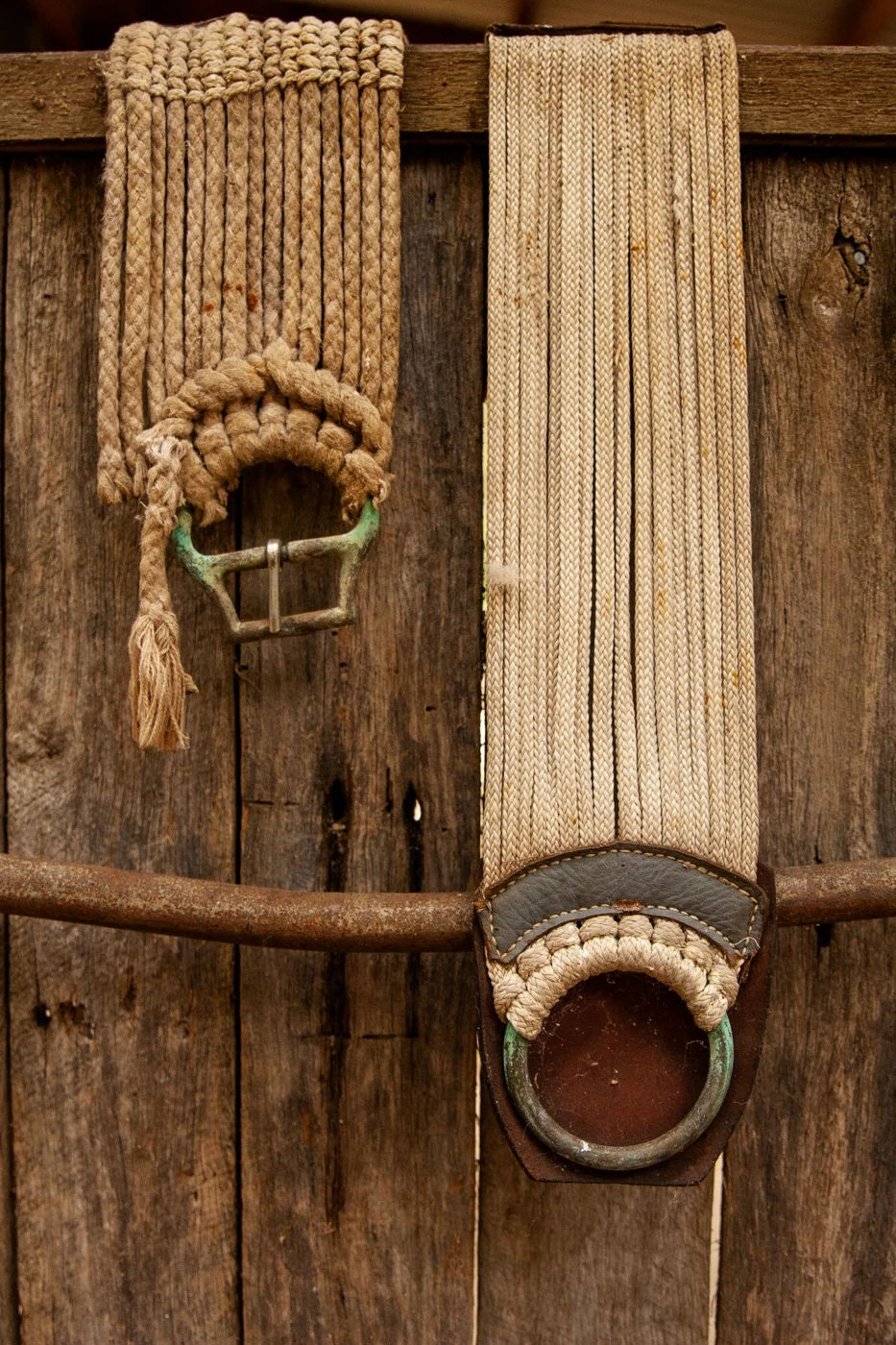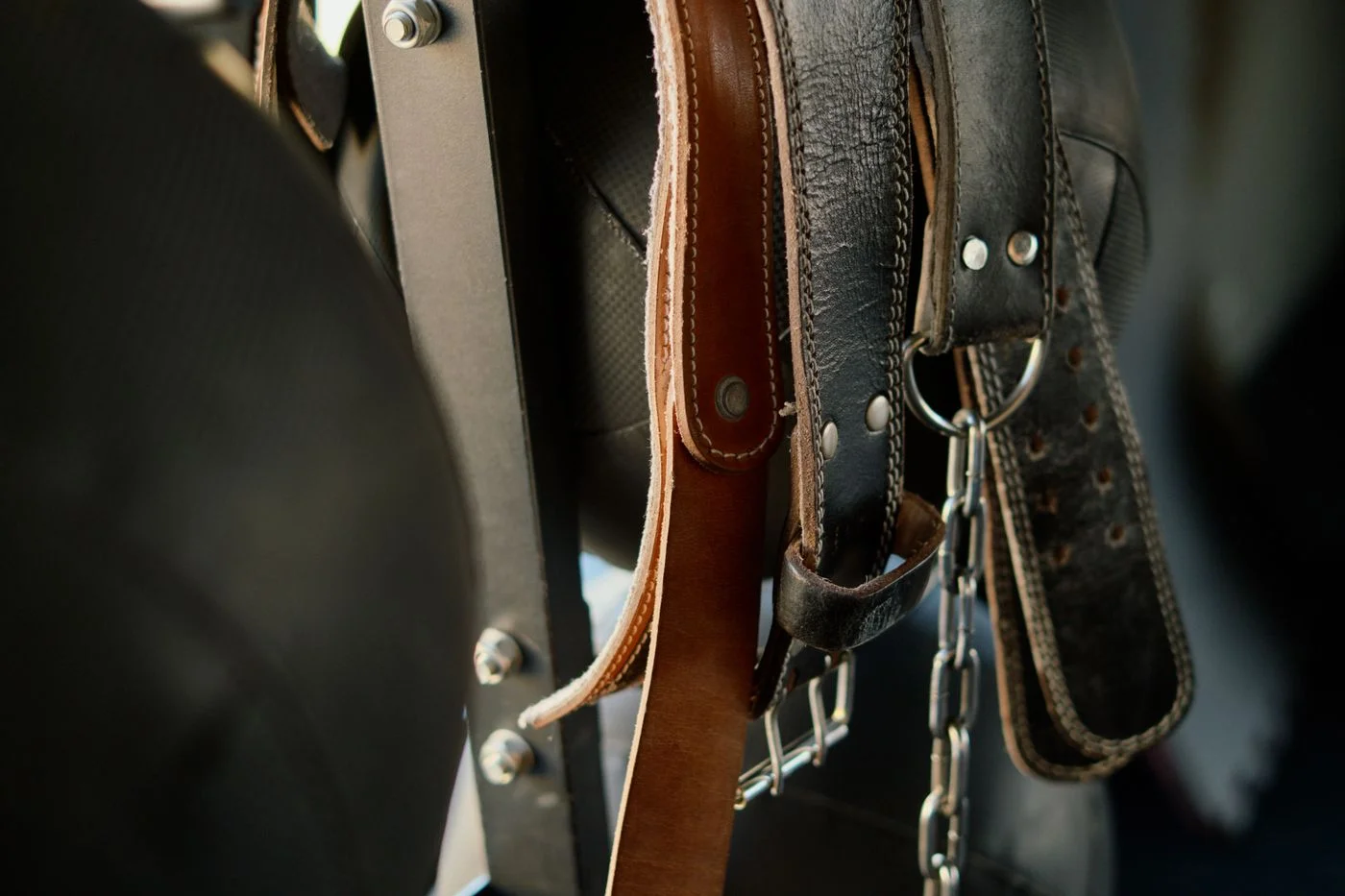
A leather belt's broad front surface is easy to admire, but most daily movement happens at its holes and buckle. Examine those areas before focusing on a finish or logo. This is especially useful when buying a discounted belt that you may be unable to return after wear.
Start at the hole you are likely to use. Its edge should look deliberate rather than torn or already stretched. Put the prong through gently and check whether it sits naturally. A hole that forces the buckle to lie at an angle may be uncomfortable even when the overall length seems right.
Follow the edges
Look along both sides and around the tip. Edge paint, folded edges, and exposed finished leather can all be legitimate construction choices. What matters during inspection is whether the finish is consistent and attached, with no obvious lifting, sticky patches, or splits where the belt bends.
Gently curve the strap as it would wrap around your waist. Do not fold it sharply to test toughness. Watch for separation between layers or a surface that opens into visible cracks. Normal surface variation is different from a finish that is already failing.
The word leather alone does not tell you the complete construction, thickness, or expected service life. Ask for the material description rather than trying to authenticate quality through a photograph or a smell test.
How the buckle is secured
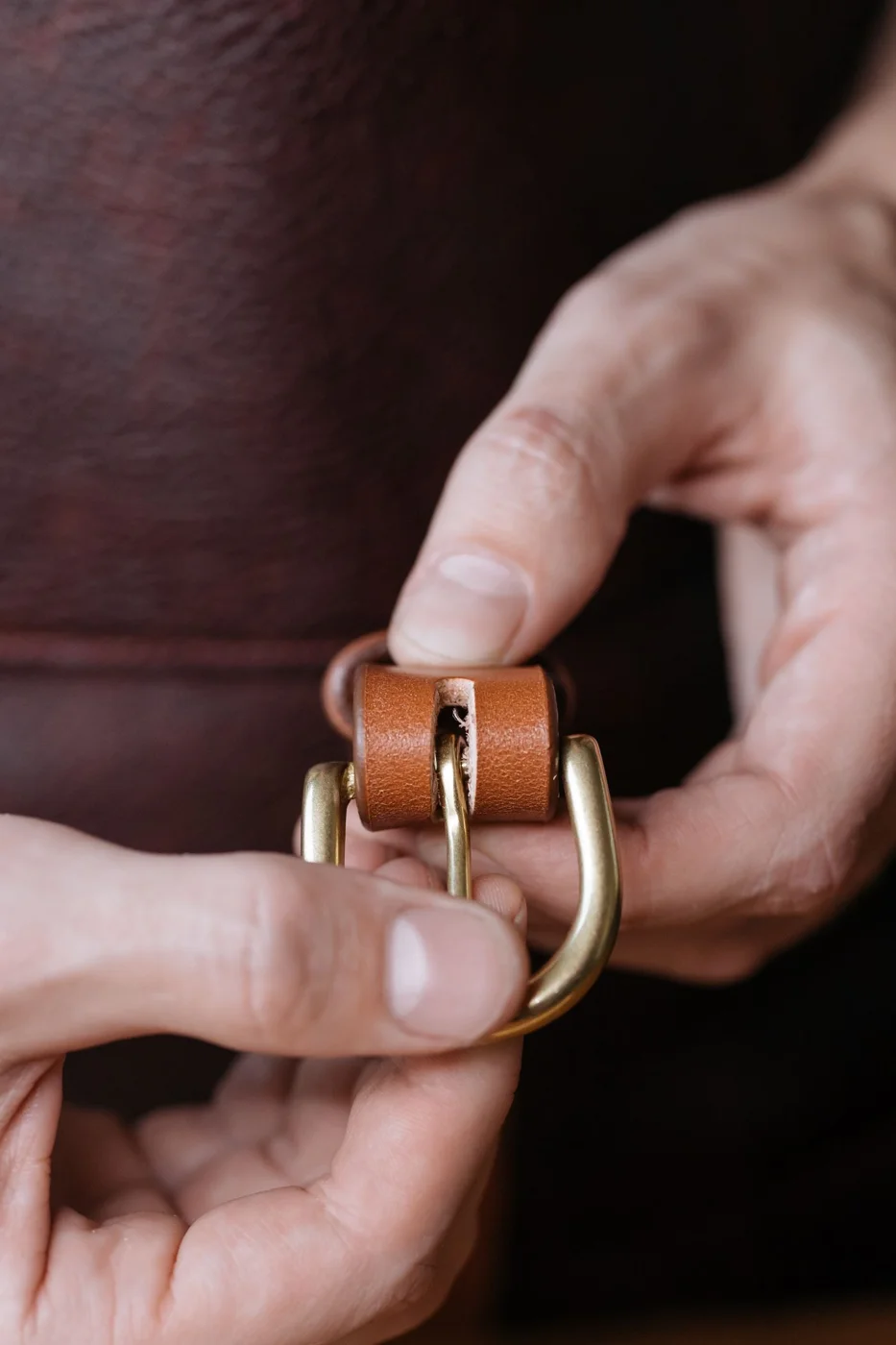
Some buckles are sewn in, some use screws or snaps, and others are designed to be removable. Each has practical consequences. Removable hardware may make replacement easier, but it should still feel secure in its intended position. A fixed buckle can be simple to use but harder to change later.
Check for rough metal edges where the buckle touches clothing or skin. Work the prong through an ordinary fastening motion and look at the keeper that holds the tail. If the keeper is too tight, every use becomes a struggle; if it is extremely loose, the tail may escape.
Before using a cleaner or conditioner, read guidance for that specific finish. A product intended for one smooth leather may be unsuitable for suede, coated surfaces, or decorative finishes. A new belt should not need an improvised treatment to conceal visible defects.
Choose a belt whose working parts feel straightforward. A handsome surface is worthwhile, but the holes, edges, and attachment determine much of the experience each time you put it on.