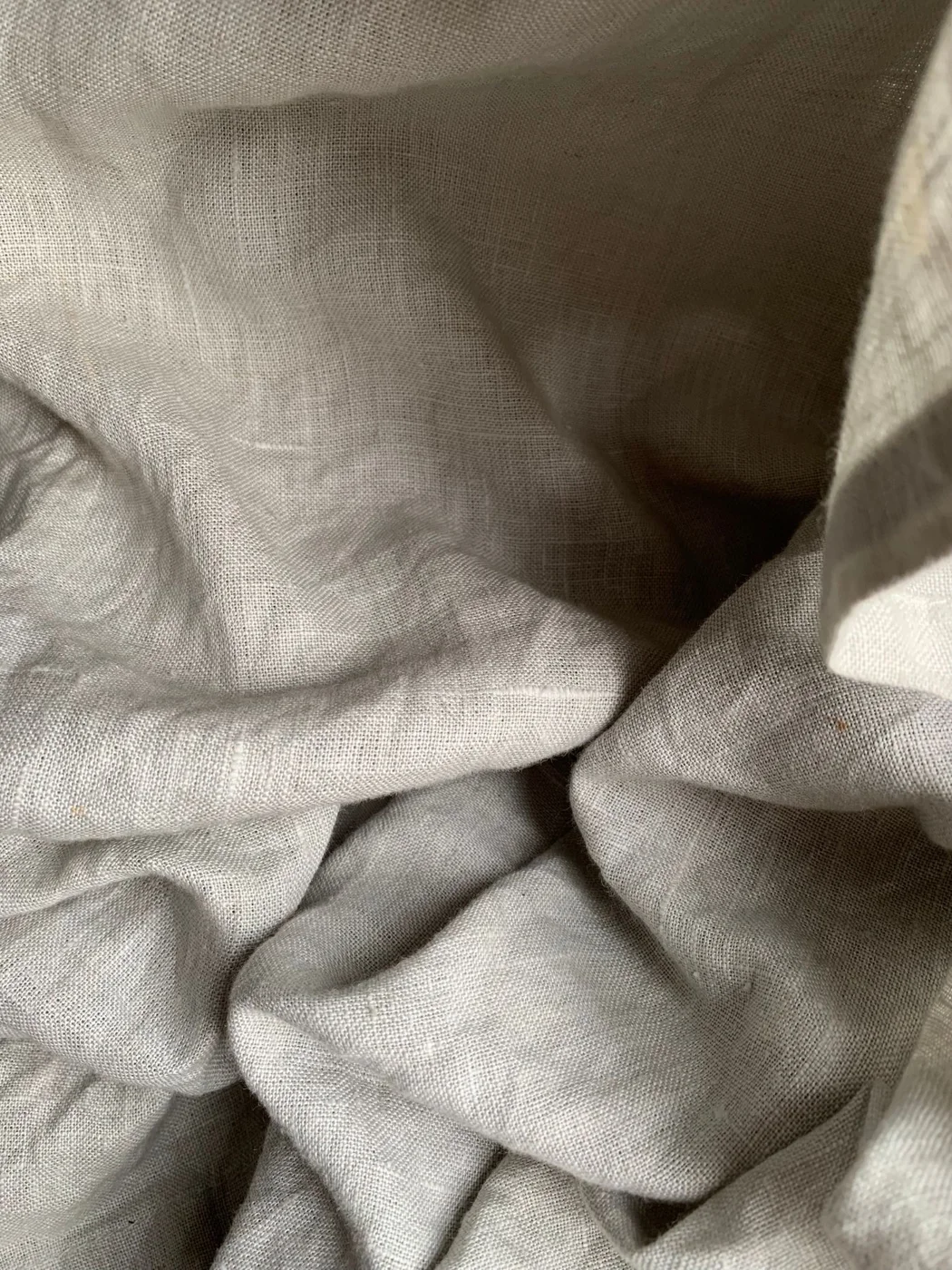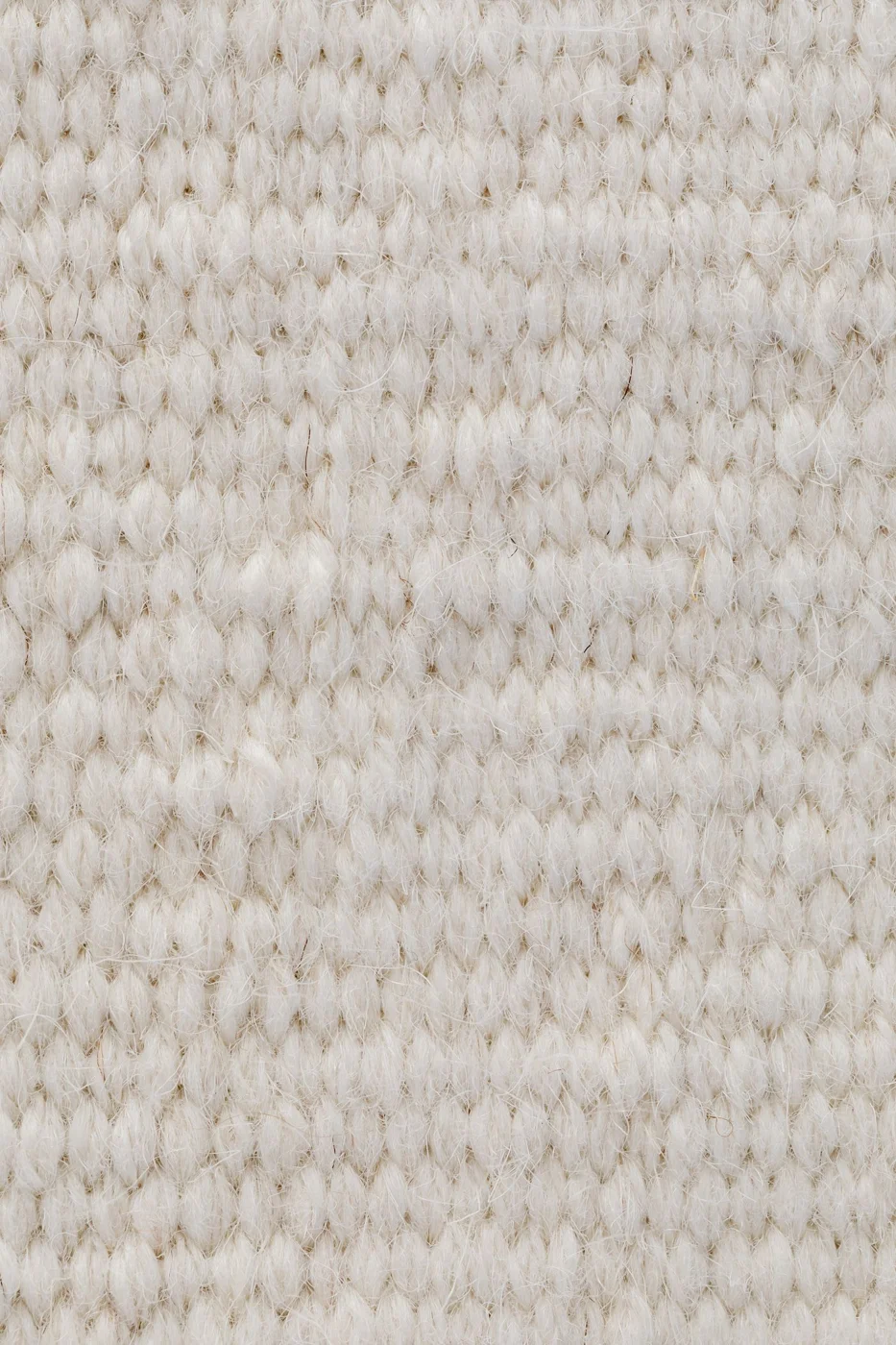
Cotton describes a fiber, while jersey describes a knitted construction. Woven cotton is made with yarns crossing in a different arrangement. This distinction helps explain why two all-cotton garments can behave differently before any added stretch fiber enters the discussion.
A jersey T-shirt usually allows movement through the knitted structure. A woven button-down may hold a crisper shape and rely more on the garment's cut for room. The exact behavior still depends on yarn, weight, density, finishing, and any other fibers in the blend.
Look at the surface and edges
Examine a familiar T-shirt and woven shirt in good light. On a knit, the looped structure may be visible; on a woven fabric, crossing yarns create a different pattern. You do not need to identify every construction to notice that the surfaces move differently in your hands.
Gently compare how each gives across its width. Avoid pulling hard on a new garment. A knit may stretch without elastane, but that does not tell you how well it will return to shape after prolonged wear. A woven fabric cut on the bias can also move differently from the same cloth cut along its straight grain.
Fit should respect the structure
A close-fitting jersey top may feel comfortable because the fabric accommodates movement. A woven top with the same flat chest measurement can feel restrictive if it lacks enough room. Do not transfer a favorite T-shirt measurement directly to every shirt pattern.
Seams and openings matter too. A woven shirt uses buttons or another opening to help you put it on, while a knit neckline must stretch enough for that action. Check whether the neck returns neatly after a normal try-on and whether the shoulder area feels comfortable when you reach forward.
Care is not interchangeable
Both garments may contain cotton but carry different instructions. Follow the label for the finished piece, including drying and ironing. Do not assume that a care routine suitable for a sturdy T-shirt is appropriate for a finely woven blouse or a shirt with special trim.
When comparing sale items, decide which behavior you want: softness and easy movement, a defined collar and silhouette, or something between those points. Neither structure is universally better. Understanding the difference simply prevents a fiber label from creating expectations that the garment's construction cannot meet.